Procurement with the CO₂ Performance Ladder 4.0: from policy to results
By using the CO₂ Performance Ladder as a Best Price-Quality Ratio (BPQR) award criterion in a tender, you encourage CO₂ reduction during the delivery of the project. From January 2027 it will be mandatory to use version 4.0 of the CO₂ Performance Ladder in procurement. In this blog you can read how procurement with the Ladder works and the four steps to implement the Ladder. In addition, Rijkswaterstaat (the Dutch agency for roads and waterways) shares tips for using the Ladder as a procurement instrument.
Activities carried out as a result of procurement accounts for 15 per cent of global CO₂ emissions. The emissions released during the delivery of public procurement are many times higher than the emissions governments produce within their own organisations. By encouraging contractors to reduce their emissions and rewarding this in a contract, you as a contracting authority can make a big impact and contribute to achieving the Paris Climate Agreement goals.
Procurement with the Ladder leads to substantial emission reductions
Using the CO₂ Performance Ladder as a BPQR award criterion is one of the ways to do this. Research by Utrecht University has shown that construction projects procured with the Ladder emitted considerably less CO₂. The reduction was particularly large when a project was awarded to a party certified at the highest Level 5 – in version 3.1 – of the Ladder.
Stimulating the market and rewarding frontrunners
More than 300 contracting authorities in the Netherlands, Belgium and other European countries currently use the CO₂ Performance Ladder as a procurement instrument. By using the Ladder in procurement, you encourage the market to get moving and reward frontrunners for their extra emissions reduction efforts.
Procurement with the CO₂ Performance Ladder 4.0
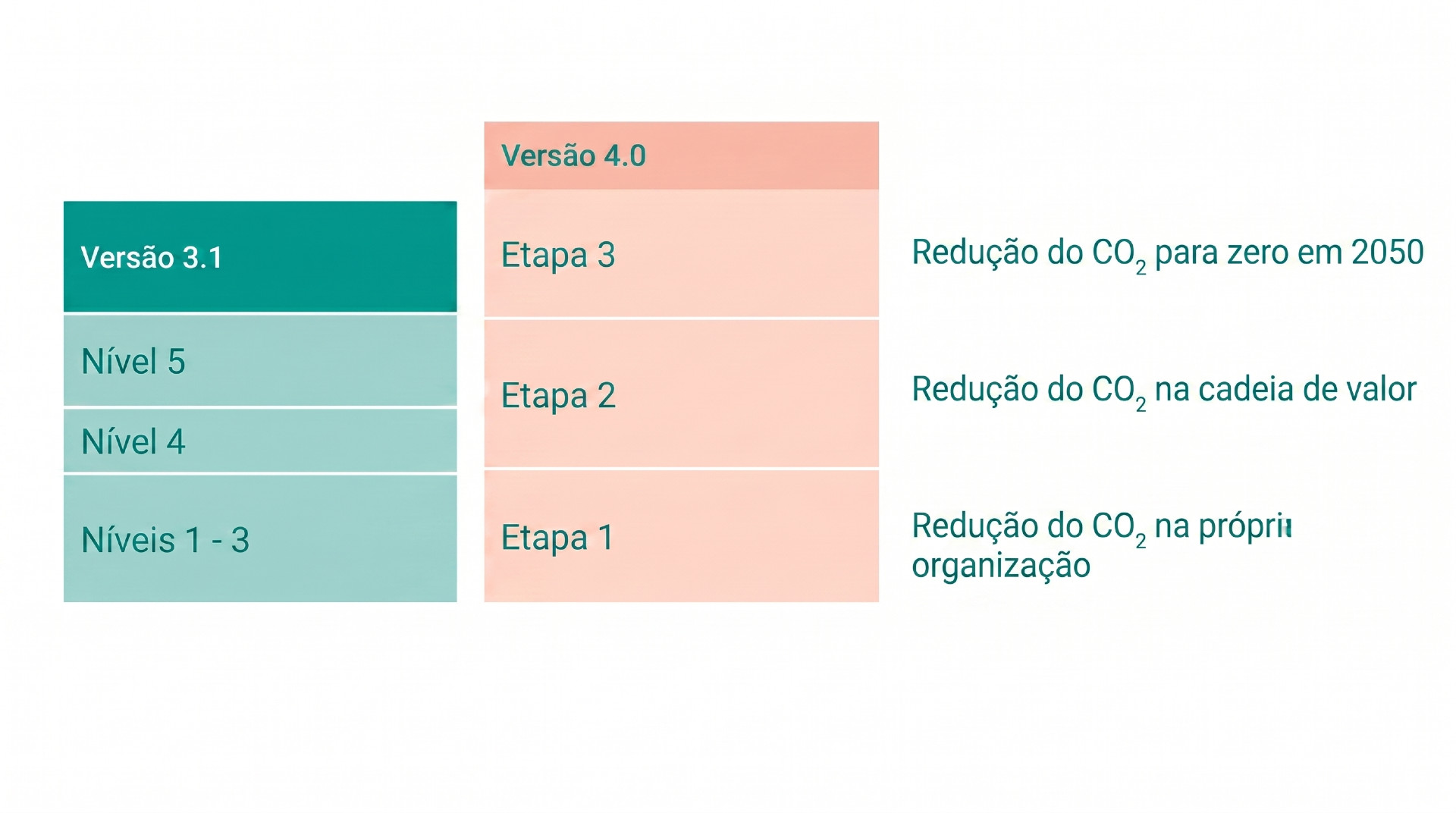
Compared with version 3.1, little has changed in version 4.0 in terms of how the Ladder is used in procurement. The main difference is the move from five Levels to three Steps. This means companies can now register at three CO₂ ambition levels – each with an associated award advantage – rather than five.
Transition arrangement to Ladder 4.0
From January 2027, contracting authorities are required to use version 4.0 in a procurement with the Ladder. Until then you may already use 4.0 in a procurement, but only if the market is ready for it. In concrete terms, this means that a large proportion of the companies in the sector are already certified to version 4.0 or are in the process of obtaining certification to this version.
You can read more about the transition arrangement for procurement with version 4.0 in this article.
Procurement guide CO₂ Performance Ladder 4.0
To support contracting authorities in using the Ladder as an award criterion, SKAO has published the Procurement Guide. Among other things, this document contains a concrete step-by-step plan, sample texts for tender documents & contracts, and an explanation of the CO₂ ambition levels that allow tenderers to distinguish themselves.
Procurement with Ladder 4.0 in four steps
Here is how to use the CO₂ Performance Ladder 4.0 award criterion in a procurement in four steps:
Step 1: include the CO₂ Performance Ladder as a BPQR award criterion
The first step is to include the CO₂ Performance Ladder as a BPQR award criterion in your tender documents. In the text you state, among other things, the three CO₂ ambition levels together with the related set, such as gaining insight into energy consumption and emissions.
For each CO₂ ambition level you make clear what advantage the tendering party enjoys. This could be, for example, a notional discount on the tender price or points. As a contracting authority you are free to choose which method you use and how high the award advantage is.
You also state in the tender documents how the tendering party can demonstrate that it meets the requirements (with a project statement or a CO₂ Performance Ladder certificate), the period within which that proof must be provided (usually one year) and the sanction if the performing party does not meet the agreed CO₂ ambition level within the set period (usually a fine).
“By using the CO₂ Performance Ladder as an award criterion, you reward organisations based on their ambitions and the impact they make. If you set a Ladder certificate only as a requirement, there is a strong chance that organisations will remain at Step 1. Using the Ladder as an award criteria rewards organisations that achieve even more impact.”
Thijs Wentink, Project Officer Procurement SKAO
Step 2: companies register with a CO₂ ambition level
The next step is for companies to submit their bids. In doing so, they indicate at which CO₂ ambition level they want to carry out the project or contract, and how they intend to demonstrate their compliance. This can be done in two ways:
With a project statement, with which a company demonstrates that it meets the requirements of the agreed CO₂ ambition level on a project-specific basis.
With a CO₂ Performance Ladder certificate whose Step corresponds to the submitted CO₂ ambition level. The CO₂ Performance Ladder certificate is proof of certification according to the CO₂ Performance Ladder 4.0 Handbook. With it, the tenderer demonstrates that the entire organisation acts in a CO₂-conscious way, including in the projects the organisation carries out.
When registering, a party indicates which independent certification body will carry out the audit. At the time of registration, a company does not yet need to hold a CO₂ Performance Ladder certificate.
NB: Companies are not obliged to register at a CO₂ ambition level.
Step 3: award the contract on the basis of the BPQR award criterion
Once you have received all tenders, you assess them on the basis of price, the CO₂ Performance Ladder award criterion and any additional criteria. This produces a best price-quality ratio. At the moment of award, the period begins within which the contractor must demonstrate that it meets the agreed CO₂ ambition level.
Step 4: the contractor carries out the contract at the agreed CO₂ ambition level
The final step is for the contractor to carry out the project at the agreed CO₂ ambition level. Via the project overview in My CO₂ Performance Ladder, the contractor gives the client insight into the project plan, the measures, the CO₂ and energy footprint and the progress of the project. These insights in turn form the basis for conversations about possible opportunities and how to seize them.
“When you procure with the Ladder for the first time, I recommend doing so step by step. Start with a selection of projects based on, for example, a certain project value or a category with the greatest CO₂ impact. Expand that to more projects and categories later.”
Thijs Wentink, Project Officer Procurement SKAO
Procurement with the CO₂ Performance Ladder: 3 tips from Rijkswaterstaat
In 2012, Rijkswaterstaat was one of the first government organisations to use the CO₂ Performance Ladder as an award criterion in tenders. From 1 July 2026, RWS will do so using CO₂ Performance Ladder version 4.0. Gerwin Schweitzer, adviser on climate-neutral and circular procurement at Rijkswaterstaat, gives three tips for using the CO₂ Performance Ladder as a BPQR criterion.
Tip 1: Announce a tender with the Ladder well in advance
“When you decide to use the Ladder as an award criterion, it is wise to announce this to the market well in advance. At RWS we keep to six months as a minimum. By communicating early, companies that want to tender for the contract have enough time to become certified at organisation level [if they wish].”
Tip 2: Be consistent in which procurement domain you apply the Ladder
“At RWS we apply the Ladder as standard in procurements for infrastructure, but also, for example, for the purchasing of services. By using the CO₂ Performance Ladder consistently within a procurement domain, companies know that they will be rewarded for their CO₂ ambitions in the future as well, and are more willing to make the investment for Ladder certification.”
Tip 3: Use the Procurement Guide as a guideline in contract models
“Although every procurement is different in substance and we have our own contract models at RWS, for the CO₂ Performance Ladder award criterion we follow the texts of the Procurement Guide 4.0 as much as possible. We then only need to specify the award advantage per Step, the sanction period and the sanction provision. We apply 2, 4 or 6 per cent award advantage, a period of one year and a penalty of 1.5 times the award advantage received.”
The most important questions about this topic are addressed in the FAQ below. If you have more questions, please contact us.
FAQ Procurement
Why would I use the CO₂ Performance Ladder in procurement?
The CO₂ Performance Ladder helps contracting authorities encourage CO₂ reduction during project delivery. Rather than including sustainability only as a requirement, tenderers are rewarded for their ambition and approach to CO₂ reduction.
This creates a positive incentive for market parties to invest in energy savings, emission reduction and innovation.
What does procurement with the CO₂ Performance Ladder ultimately deliver?
Experience shows that the CO₂ Performance Ladder leads to measurable emission reductions, greater attention to CO₂ reduction during projects, innovation in delivery, and better collaboration between contracting authorities and contractors. Over the longer term, this contributes to structural sustainability across the market. In this way, the Ladder delivers benefits not only for individual projects, but also supports the wider climate transition within sectors.
How does the CO₂ Performance Ladder relate to sustainable procurement?
The CO₂ Performance Ladder is a tool for putting sustainable procurement policy into practice. Ideally, it forms part of a broader strategy in which an organisation sets climate goals, establishes reduction targets and applies sustainable procurement systematically. This creates a consistent approach to the market and gives suppliers clarity about the contracting authority’s expectations.
Como posso participar em concursos com a CO₂ Performance Ladder?
A CO₂ Performance Ladder, enquanto instrumento de concurso, baseia-se num critério BPKV que pode conferir uma vantagem competitiva no concurso. O Guia de Licitações 3.1 descreve a forma de aplicar este critério, incluindo o texto integral do mesmo. Leia mais sobre este tema na página das licitações.
Leia também este artigo sobre a legislação da UE em matéria de contratos públicos e a Escala de Desempenho CO₂.
Que entidades adjudicantes utilizam a CO₂ Performance Ladder em procedimentos de contratação pública?
Mais de 8.000 organizações possuem um certificado da CO₂ Performance Ladder, e mais de 300 entidades adjudicantes nos Países Baixos e, entre outros, na Bélgica,Irlanda, França, Reino Unido, Alemanha and Portugal utilizam a CO₂ Performance Ladder em procedimentos de contratação pública. Entre estas encontram-se organizações do governo nacional, municípios, autoridades de gestão da água e províncias. Para uma visão geral destas entidades adjudicantes, consulte a página de Participantes.
Which projects benefit most from the CO₂ Performance Ladder?
The CO₂ Performance Ladder comes into its own on projects where the contractor has real influence over CO₂ emissions during delivery. This applies, for example, to infrastructure projects, construction and maintenance projects, civil works, energy projects and services with a substantial climate impact. The greatest added value arises when the contractor can make choices during delivery that lead to demonstrable CO₂ reduction.
Posso utilizar a CO₂ Performance Ladder como requisito de idoneidade ou critério de seleção?
Não, a CO₂ Performance Ladder não é adequada como requisito de elegibilidade ou critério de seleção. Existem várias razões:
Implementar a CO₂ Performance Ladder numa organização exige tempo e esforço. Exigir que uma organização inteira se certifique antes de participar num concurso para um projeto específico é desproporcional, especialmente se o projeto representar apenas uma parte reduzida do volume de negócios. Do ponto de vista jurídico, tal exigência não estabelece uma ligação suficiente com o objeto do contrato.
Utilizar um certificado como critério de elegibilidade implica que as entidades sem o certificado ou com um nível inferior tenham menos hipóteses de serem selecionadas, podendo resultar em discriminações, nomeadamente contra empresas estrangeiras ou de pequena dimensão. A legislação contratual não admite essa discriminação.
Este princípio aplica-se a todos os concursos, seja a nível europeu, nacional ou de tratados privados. Para contratos de menor dimensão, a exigência é igualmente discriminatória. Nos contratos privados, não ocorre qualquer seleção adicional.
A CO₂ Performance Ladder é uma certificação ao nível da organização, mas os requisitos num procedimento de contratação não têm de estar ligados ao contrato/projeto?
Do ponto de vista jurídico, os requisitos nos procedimentos de contratação devem estar sempre ligados ao objeto do contrato. Um certificado da CO₂ Performance Ladder demonstra que uma organização cumpre os requisitos do Manual da CO₂ Performance Ladder e atua de forma estruturalmente consciente em relação ao CO₂. Isto aplica-se a toda a organização, incluindo aos projetos que executa.
Quando a CO₂ Performance Ladder é aplicada num concurso público, o foco recai, portanto, sempre sobre o projeto. O critério de adjudicação CO₂ Performance Ladder estabelece requisitos para a execução do projeto específico, em vários níveis de ambição de CO₂. Estes requisitos ao nível do projeto estão detalhados no Guia de Contratação CO₂ Performance Ladder 4.0. Os níveis de ambição de CO₂ com requisitos ao nível do projeto correspondem aos vários degraus da CO₂ Performance Ladder, conforme descrito no Manual da CO₂ Performance Ladder versão 3.1 e versão 4.0.
Os requisitos do certificado (ao nível da organização) e os requisitos específicos do projeto do critério de adjudicação não são idênticos, mas são comparáveis em termos de conteúdo. Por esse motivo, a entidade adjudicante pode aceitar um certificado da CO₂ Performance Ladder como prova do nível de ambição de CO₂ com que um concorrente apresentou a sua proposta.
É necessário que uma organização seja certificada para participar num concurso que utiliza a CO₂ Performance Ladder?
Não, isto não é necessário. As organizações que apresentam uma proposta num concurso em que a CO₂ Performance Ladder é utilizada como critério de adjudicação fazem-no com uma etapa de ambição de CO₂ na qual pretendem executar o contrato. Após a adjudicação, a organização deve demonstrar, no prazo de um ano, que cumpre os requisitos do critério de adjudicação da CO₂ Performance Ladder, seja através da apresentação de um certificado da CO₂ Performance Ladder, seja através de uma declaração de projeto para a etapa de ambição de CO₂ proposta.
How does the CO₂ Performance Ladder 4.0 award criterion work?
The contracting authority includes the award criterion in the invitation to tender. Tenderers then choose the CO₂ Ambition Level at which they wish to deliver the project. The higher the CO₂ Ambition Level, the greater the possible award advantage. After award, the contractor must demonstrate that the chosen CO₂ Ambition Level is actually achieved.
By using the Ladder in a tender, the contract is not awarded to the lowest bid, but to the tender offering the Best Price Quality Ratio (BPQR).
Procurement Guide 4.0 describes how the CO₂ Performance Ladder can be used as an award criterion in four steps. This guide also contains the wording of the CO₂ Performance Ladder 4.0 award criterion.
Can a combination of companies submit a joint tender?
Yes.
In a combination, the party with the lowest CO₂ Performance Ladder Step determines the maximum CO₂ Ambition Level at which the combination can tender when certificates are used.
Alternatively, the combination can opt for a project-specific Project Statement.
What happens after the contract is awarded?
After award, the CO₂ Ambition Level offered is set out contractually.
The contractor must then demonstrate, within the agreed period (usually one year), that the chosen level is being met. This is subsequently repeated periodically for the duration of the project.
Que vantagem competitiva devo atribuir a cada nível da CO₂ Performance Ladder?
Cada nível de ambição na redução de CO₂ possui uma vantagem competitiva. Na qualidade de cliente, deverá definir a vantagem para cada nível. Normalmente, utilizam-se percentagens, mas é também possível recorrer a valores fixos ou pontos. O nível da vantagem e a forma de cálculo devem ser explicitados nos documentos do concurso, de modo a que fique claro como essa vantagem se relaciona com a pontuação de outros critérios qualitativos (critérios PPP), conforme o Guia de Licitações 3.1.
Como posso saber se uma organização realmente atinge o nível de ambição declarado num concurso?
As organizações concorrentes num concurso que inclua o critério BPKV podem cumprir esse critério de duas formas:
Apresentando um Certificado de Consciencialização de CO₂ no nível de ambição pretendido, demonstrando que cumprem os requisitos da CO₂ Performance Ladder, inclusive durante a execução do projeto.
Cumprindo os requisitos específicos do critério BPKV no nível escolhido e submetendo uma declaração de projeto correspondente.
Qual é o valor acrescentado de um certificado da CO₂ Performance Ladder em comparação com uma declaração de projeto?
Um certificado da CO₂ Performance Ladder é muito mais económico (em termos de tempo e dinheiro) para as organizações que concorrem a vários projetos ou contratos que utilizam a CO₂ Performance Ladder. O certificado demonstra que toda a organização opera de forma consciente em relação ao CO₂, incluindo os projetos da CO₂ Performance Ladder que realiza.
Uma grande vantagem é que o certificado pode ser utilizado em todos os concursos (mesmo de diferentes entidades adjudicantes) que utilizem o critério de adjudicação da CO₂ Performance Ladder. Uma declaração de projeto é válida apenas uma vez, especificamente para o projeto para o qual é emitida por um organismo de certificação.
Como pode a CO₂ Performance Ladder ser utilizada em procedimentos de contratação abaixo dos limiares europeus?
A CO₂ Performance Ladder também pode ser aplicada em procedimentos de contratação abaixo dos limiares europeus.
Em procedimentos formais (como os procedimentos nacionais), pode ser utilizada como critério de adjudicação. Em procedimentos menos formais, pode ser solicitado aos concorrentes que indiquem o nível de ambição de CO₂ com que irão executar o contrato e o organismo de certificação (OC) envolvido. A entidade adjudicante pode então ajustar o preço da proposta com base na percentagem correspondente para determinar a classificação.
Também é possível ter em conta o nível da CO₂ Performance Ladder na seleção dos candidatos. Nesse caso, os candidatos devem ser selecionados ao mesmo nível, de forma a garantir uma comparação justa.
Pretendo lançar um procedimento de contratação pública de longo prazo com base na versão 3.1, mas o projeto continuará após a transição para a versão 4.0. O que devo incluir nos documentos do concurso?
Inclua o seguinte texto modelo nos seus documentos de concurso. Desta forma, fica claro que os certificados com base na versão 4.0 também são aceites:
“Neste procedimento de contratação pública é aplicado o critério de adjudicação da CO₂ Performance Ladder 3.1. Se um Certificado de CO₂ Performance Ladder for utilizado para demonstrar o cumprimento deste critério de adjudicação, tal pode igualmente ser feito com um certificado baseado no Manual 4.0 da CO₂ Performance Ladder.
Aplica-se o seguinte:
Um certificado baseado na CO₂ Performance Ladder 4.0 – Etapa 1 é aceite como prova do nível de ambição CO₂ 3 do critério de adjudicação da CO₂ Performance Ladder 3.1.
Um certificado baseado na CO₂ Performance Ladder 4.0 – Etapa 2 ou Etapa 3 é aceite como prova do nível de ambição CO₂ 5 do critério de adjudicação da CO₂ Performance Ladder 3.1.”
Este texto modelo consta igualmente do documento completo relativo às disposições transitórias.
Enquanto adjudicatário, pretendo continuar a comprovar o meu projeto em curso com um Certificado de CO₂ Performance Ladder 3.1 — é possível?
Não, não é possível. A partir de 14 de janeiro de 2027, deixa de ser possível certificar a sua organização com base no Manual 3.1 da CO₂ Performance Ladder. A partir dessa data, as auditorias à CO₂ Performance Ladder só poderão ser realizadas com base no Manual 4.0.
Até 14 de janeiro de 2027, ainda é possível mandar realizar auditorias ao abrigo do Manual 3.1. Esses certificados permanecem válidos até à auditoria (anual) seguinte. Isto significa que poderão existir certificados válidos do Manual 3.1 até, no máximo, 14 de janeiro de 2028.
Os projetos cuja contratação tenha sido feita com base no Manual 3.1 podem (também) ser comprovados com um Certificado de CO₂ Performance Ladder 4.0. A SKAO aconselha as entidades adjudicantes a aceitá-los da seguinte forma:
Um certificado de Etapa 1 do Manual 4.0 é aceite como um certificado de nível 1, 2 e 3 do Manual 3.1
Um certificado de Etapa 2 do Manual 4.0 é aceite como um certificado de nível 4 e 5 do Manual 3.1
Um certificado de Etapa 3 do Manual 4.0 é aceite como um certificado de nível 4 e 5 do Manual 3.1
A SKAO recomenda que os certificados 4.0 sejam aceites como prova em concursos públicos 3.1.
A transição para a versão 4.0 exige esforços adicionais à minha organização?
A versão 4.0 da CO₂ Performance Ladder traz alterações face à versão anterior, a 3.1. Assim, os cinco níveis de certificação são substituídos por três etapas e é exigida às organizações ainda mais ambição no que respeita à redução das suas próprias emissões de CO₂ (âmbito 1 e 2), das suas emissões na cadeia de valor (âmbito 3) e das emissões fora da cadeia de valor. Além disso, as partes têm de dedicar mais atenção à poupança de energia, às ambições de longo prazo e a um enraizamento mais amplo da redução de CO₂ na organização.
Para a maioria das organizações atualmente certificadas no nível 3 ao abrigo do Manual 3.1, um esforço comparável permitir-lhes-á habilitar-se à etapa 1 da versão 4.0. A etapa 2 da versão 4.0 exige um esforço comparável ao do nível 5 da versão 3.1, mas apresenta diferenças de conteúdo. Assim, o âmbito 3 tem de ser identificado de forma mais completa e as organizações ficam a conhecer as outras emissões influenciáveis (OBE). O horizonte dos objetivos é igualmente alargado para o médio prazo. De resto, estes objetivos só têm de ser definidos para a(s) atividade(s) mais importante(s).
De um modo geral, pode afirmar-se que os esforços necessários para cumprir as etapas 1 e 2 do Manual versão 4.0 são equivalentes aos da versão 3.1 da seguinte forma:
What is the advantage of external verification?
The contracting authority does not have to assess compliance with all requirements itself. This assessment is carried out by an independent, accredited certification body. This ensures an objective assessment, reduces the administrative burden for the contracting authority, and provides independent assurance of performance.
Que entidades contratantes utilizam a CO₂ Performance Ladder na contratação?
Existem mais de 8.000 organizações certificadas pela CO₂ Performance Ladder e mais de 300 entidades contratantes que a utilizam em concursos, incluindo órgãos do governo nacional, municípios, conselhos de água e províncias. Para uma visão geral, consulte a página das entidades contratantes.
Posso efetuar compras responsáveis com a CO₂ Performance Ladder?
Sim! A CO₂ Performance Ladder integra o Guia Holandês para Compras Socialmente Responsáveis. Para mais informações, visite o website do Pianoo.
Como posso saber se a organização vencedora está a implementar medidas no meu projeto?
Se o critério BPKV for cumprido pela apresentação do Certificado de Consciencialização de CO₂, a empresa certificada possui um sistema de gestão de CO₂ sujeito a auditorias anuais, que verificam não só os objetivos e medidas a nível organizacional, mas que, de forma aleatória, inspecionam também os projetos que se beneficiam da vantagem competitiva. Caso o critério seja cumprido de forma específica para o projeto, a empresa deve implementar medidas de redução e um OC verificará a sua implementação, elaborando uma declaração de projeto.
O que acontece se uma empresa não atingir a etapa de ambição de CO₂ acordada?
Pode acontecer que o contratado não consiga cumprir, de forma completa ou atempada, os requisitos do critério de adjudicação da CO₂ Performance Ladder através de uma declaração de projeto ou de um certificado. Neste caso, a entidade adjudicante deve incluir uma sanção nos documentos do concurso.
A recomendação é incluir uma sanção que ultrapasse a vantagem obtida na adjudicação. Para determinar o montante da sanção, calcula-se a diferença entre o valor de qualidade atribuído no procedimento de contratação – a etapa de ambição de CO₂ acordada – e o valor de qualidade final alcançado (etapa de ambição de CO₂), multiplicando-se este resultado por um fator (por exemplo, 1,5). Um exemplo de sanção e um exemplo de cláusula de sanção podem ser encontrados no Guia de Contratação 4.0.
Exemplo de sanção: O nível de ambição de CO₂ 2 resultou, no momento da proposta, numa vantagem na adjudicação de 75 000 € (desconto fictício), mas este não foi alcançado pelo adjudicatário. O adjudicatário apresenta um certificado da CO₂ Performance Ladder no nível 1, ao qual corresponde uma vantagem na adjudicação de 37 500 €. O montante da sanção será então 1,5 × (75 000 € − 37 500 €) = 56 250 €.
Anyone starting certification usually focuses on one moment: the first audit. That makes sense, since it’s the step that counts for the tender you’re currently pursuing. What comes afterwards matters just as much, however: keeping your CO₂ Performance Ladder certificate. It’s a system with its own rhythm, one you…
By getting to grips with other influenceable emissions (OIE), you can impact emission reduction beyond your organisation and even your value chain as well. In this blog we explain why OIE are part of the new version of the CO₂ Performance Ladder, the categories of OIE, when you must…
Receber o boletim informativo?
Gostaria de receber atualizações, casos de projetos e notícias sobre a CO₂ Performance Ladder a cada dois meses? Inscreva-se na nossa newsletter!
"*" indica campos obrigatórios
Manage Consent
To provide the best experiences, we use technologies like cookies to store and/or access device information. Consenting to these technologies will allow us to process data such as browsing behavior or unique IDs on this site. Not consenting or withdrawing consent, may adversely affect certain features and functions.
Functional
Always active
The technical storage or access is strictly necessary for the legitimate purpose of enabling the use of a specific service explicitly requested by the subscriber or user, or for the sole purpose of carrying out the transmission of a communication over an electronic communications network.
Preferences
The technical storage or access is necessary for the legitimate purpose of storing preferences that are not requested by the subscriber or user.
Statistics
The technical storage or access that is used exclusively for statistical purposes.The technical storage or access that is used exclusively for anonymous statistical purposes. Without a subpoena, voluntary compliance on the part of your Internet Service Provider, or additional records from a third party, information stored or retrieved for this purpose alone cannot usually be used to identify you.
Marketing
The technical storage or access is required to create user profiles to send advertising, or to track the user on a website or across several websites for similar marketing purposes.