
- Blogue
Calculating a carbon footprint for the CO₂ Performance Ladder 4.0
Calculating a carbon footprint for the CO₂ Performance Ladder 4.0 is simpler than it seems: what each Step requires, how to start and which mistakes to avoid.

Step 2 and 3 are the highest steps of the CO2 Performance Ladder version 4.0. Both focus on CO2 reduction with the supply chain and even beyond. Step 3 requires the most ambitious targets and plans. In this blog, we explain which requirements apply to Step 2 and 3 and where they differ from each other, Step 1 and the levels in the previous version of the Ladder. If you are not yet familiar with the Ladder, read about it here.
The substantive differences between version 3.1 and version 4.0 of the CO2 Performance Ladder are still fairly limited for the entry levels. But the differences between the higher levels and steps are quite significant.
Get startedSteps 2 and 3 both focus on CO2 emissions from activities within the own organisation, at other parties in your supply chain or even beyond. These steps therefore make less distinction between the scopes and look more at where the most impact in terms of CO2 reduction can be realised.
The main difference between the two steps is that for Step 2 you can limit yourself to the emissions of your main activities, while for Step 3 you have to address all activities you can influence.
The impact and influence analysis forms the foundation of Step 2. For this analysis, you map out which of your activities emit the most CO2 and which of these your organisation has the most influence over. You then focus your attention on these most important activities. After making this analysis, you set the necessary measures out in time: what can be done in the short term, what in a few years’ time, and what can only be done at a later stage?
Apart from the difference in focus (your own organisation vs. your organisation and value chain), Step 2 also goes further than Step 1 in other aspects. For instance, you set goals and ambitions not three, but five to ten years in the future.
In addition, the role of key persons – whom you have to appoint, just as in Step 1 – is greater. These people must really play an active role in raising CO2 awareness within your organisation. This means, for example, ensuring that CO2 reduction is on the agenda at every project meeting.
“I hope that companies, when making their plans, go into it openly and dare to tackle sacred cows.”
Harald Versteeg, chair of the Central College of Experts (CCvD) and Programme Manager Sustainability at Rijkswaterstaat
A number of new requirements apply at Step 2 compared to the previous version of the Ladder.
The Step selector shows which Step of version 4.0 matches your current level.
The spot on the horizon for Step 3 is zero emissions in 2050 for all scopes. This means that Step 3 focuses not only on your organisation’s main activities – as in Step 2 – but on all activities. So the ambition level of Step 3 is a lot higher. This allows you to distinguish yourself from others in your sector even more than in the previous version of the Ladder. The climate transition plan thus also calls for a broader strategy. Organisations that want to be certified for Step 3 must demonstrate with figures (quantitatively) how they will realise CO2 reductions within their organisation, chain and possibly beyond (OIEs) towards 2050.
“’We made a conscious decision to move emissions to zero. By setting the bar at the very highest level, the real bottlenecks for organisations become clear”
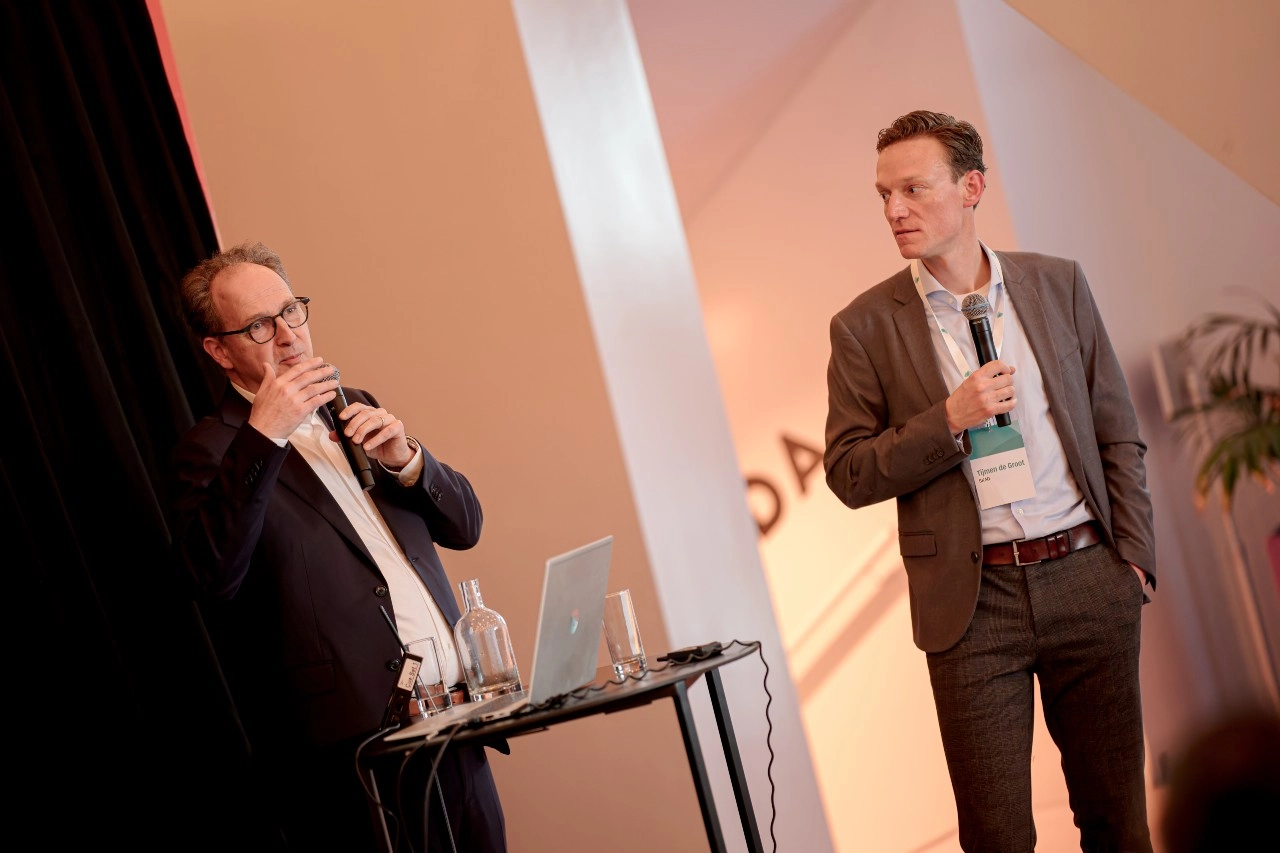
Tijmen de Groot, project leader 4.0 SKAO
Step 3 is the only step that works with exemptions, two in total. The first is that small organisations (less than 250 employees) do not have to discuss their climate transition plan with an independent expert. Nor do small organisations have to play a leading role in a collaboration.
Work is also currently underway on Step 4 of the CO2 Performance Ladder version 4.0. This step focuses on the absolute leaders per industry when it comes to reducing CO2 emissions. Compared to Step 3, Step 4 calls for even faster progress towards zero emissions. Step 4 is not expected to be launched until 2026 at the earliest.
These are the three steps of the CO₂ Performance Ladder version 4.0 Step 2 and 3 of version 4.0: reducing CO₂ with the supply chainIn the Dutch video below (with English subtitles), Tijmen de Groot and Harald Versteeg elaborate on the requirements of Steps 2 and 3 and the differences with Step 1 and the previous Handbook. In the video, they also answer questions from organisations that attended the session. The main questions asked are addressed in the FAQ below. Should you still have questions after watching the webinar session, please contact us.
At least once a year. The purpose of preparing a footprint is to be able to steer CO₂ in a timely and focused manner. If organisational processes require it, it can be beneficial to prepare a footprint more frequently.
In principle, Step 1 only covers scopes 1 and 2, so no. However, there are two exceptions: an organisation can voluntarily include business travel (a scope 3 category) and must always report on the supply chain emissions of fuels (so-called Well-to-Tank emissions).
Electrification almost always leads to energy savings.
It does not matter whether grey or green electricity is used. For example, a car with an internal combustion engine has an energy loss of approximately 70%. If you add the conversion loss from crude oil to fuel, you arrive at a total loss of approximately 80%. An electric car loses about 20% during driving. If you then add the loss in the power station (if it is grey electricity) and the transport loss, the total loss is about 60%.
Between two comparable cars, the electric is always more energy-efficient.
Electrification almost always leads to energy savings. (See also the section ‘How can large-scale electrification be combined with energy savings?’)
As for the answer regarding subcontractors using more diesel: at Step 1 this is outside the mandatory targets for energy savings. The aim is to reduce the organisation’s own energy consumption (in emission terms: scopes 1 and 2). Of course, at Steps 2 and 3 the intention is that the emissions from subcontractors will be reduced.
No. An accountant will always have to independently determine compliance with the CSRD. However, it is possible that the accountant may take the auditor’s opinion as background information. Certification for the Ladder can therefore be helpful.
An external consultant can also be a key person (it is about a person or role). It is, however, important that there is always at least one key person from within the organisation.
Yes, certainly. Non-CO₂ greenhouse gases include methane (CH₄), nitrous oxide (N₂O), HFCs, PFCs, SF₆ and NF₃. These are the greenhouse gases that were included in the Kyoto Protocol in 1997 (NF₃ was added at a later stage). This article provides more explanation about the role of non-CO₂ greenhouse gases in CO₂ Performance Ladder 4.0.
That is the intention. SKAO will advise contracting authorities on this in the new Procurement Guide (expected summer ’25). It will include recommended fictional discounts for tenders as well as award criteria.
Material FLAG emissions must be included in Scope 1 (for direct emissions) or Scope 3 (in the value chain), in accordance with the GHG Protocol and thus the CO₂ Performance Ladder. If these involve non-CO₂ greenhouse gases such as methane or nitrous oxide, they must be recorded separately under Scope 1 or 3.
Start with the Scope 3 emissions that are relatively significant and where your influence is relatively large. These factors often go hand in hand: if a supplier is responsible for substantial Scope 3 emissions, you probably purchase a large volume from them, increasing the likelihood of engaging them in discussions. It is inherent to Scope 3 that your influence is ultimately limited. What matters most is showing that you are doing everything you can to reduce these emissions.
Many small organisations only have one person responsible for CO₂ management. In such cases, it may be difficult to find another employee who is both independent and knowledgeable enough to conduct the internal audit. It may therefore be helpful to have the internal audit conducted by, for example, a QHSE officer from a partner company or an external advisor.
From Step 2 onwards, you are required to provide a qualitative OIE analysis. Avoided emissions are part of this. The Questionnaire Other Influenceable Emissions (OIE) can be used as a tool. For a quick first check, use the OIE decision tree.
Start with a high-level analysis of your value chain. Many organisations begin with the spend-based method, using procurement data. This provides quick insight into the magnitude and relevance of different activities and Scope 3 categories. You can then deepen your understanding with other methods that better reflect the impact of reduction measures. Databases such as AiB, EcoInvent, Exiobase, DEFRA (GOV.UK), or ADEME are useful starting points. Construction companies can use DGBC’s Scope 3 Guide. Read more about addressing your scope 3 emissions.
Public authorities with a Step 2 or 3 certificate are required to collaborate with their value chain partners, regardless of whether they use the CO₂ Performance Ladder in procurement. Authorities using the Ladder without certification (or only at Step 1, which does not require Scope 3 considerations) are still encouraged to collaborate with certified contractors through enhanced project information exchange via My CO₂ Performance Ladder in version 4.0.
The core of the plan should include your organisation’s long-term strategy and objectives, with zero emissions by 2050 as the goal. The specific requirements are outlined in criterion 3.B.1 of CO₂ Performance Ladder version 4.0.
A CO₂ Performance Ladder, a ISO 14001 e a ISO 50001 são todas normas de sistemas de gestão com possibilidade de certificação. Abrangem temas que se sobrepõem: gestão ambiental (ISO 14001), energia (ISO 50001) e CO₂ (a Ladder). No entanto, ao contrário das normas ISO, a Ladder está estruturada em três Etapas e está alinhada com o GHG Protocol. A CSRD não é uma norma de sistema de gestão, mas sim uma diretiva europeia relativa ao relato de sustentabilidade. Consulte este artigo para saber mais sobre a sua relação com a Ladder.
A plan developed for CSRD or SBTi provides a strong foundation for the Ladder’s climate transition plan. The Ladder’s requirements have been aligned as much as possible with those of these frameworks. Often, only one plan is needed. However, due to the inclusion of other influenceable emissions (OIE), SBTi or CSRD plans may need to be expanded for full compliance.
By definition, Scope 3 reduction requires collaboration. These emissions occur within the chain, so coordination with clients, suppliers or other value chain actors is always necessary. While collaboration is a feature of all perspectives at Steps 2 and 3, Perspective D provides the most opportunities. Each certificate holder is responsible for the project files relating to parts of the project within their organisational boundaries. Paragraph 4.1.3 of CO₂ Performance Ladder 4.0 explains how this works. Multiple parties in a partnership may therefore report on the same project.
Circularity plays several roles in Handbook 4.0. First, reducing CO₂ emissions – a core element of climate action – is also central to circularity. Second, Handbook 4.0 places more emphasis on long-term CO₂ reduction and other influenceable emissions (at Steps 2 and 3), creating greater opportunities for a circular approach among certificate holders.
Only direct contributions by the organisation that result in CO₂ removal may count as Other Influenceable Emissions (OIE). If CO₂ compensation is solely a financial transaction (e.g. the purchase of carbon credits), it is considered an indirect contribution and does not count towards the Ladder.
The handbooks per Step contain the only official lists of requirements provided by SKAO. We prefer not to use the term ‘checklist’ as the emphasis of a management system should be on processes that support continuous improvement.
In principle, yes. However, we assume the additional effort required will be considerable.
You can certify directly to Step 3, even without holding a Step 1 certificate. However, you cannot go straight to Step 3 if your organisation has not operated an energy or CO₂ management system over the past year or has not yet achieved any targets.
No. Emission savings mean reduced emissions, whereas negative emissions refer to actively removing CO₂ from the atmosphere.
While familiarity with version 3.1 can be useful, it is not required. Only for Step 3 are there restrictions on certifying in one step: organisations must have achieved targets or operated an energy/CO₂ management system in the past year.
While nothing changes for most organisations, average audit time is expected to increase slightly. This depends on organisational size (according to the new criteria, see section 4.2 in the handbook) and the Step sought. For detailed information, look at the audit days table.
As an energy and CO₂ management system, the Ladder is designed to support active CO₂ reduction. While CO₂ compensation, whether domestic or international, can contribute to climate action, it is considered a supplementary measure and does not count towards the CO₂ Performance Ladder.
The PMC analysis from Handbook 3.1 forms the basis for the I&I analysis in version 4.0. The I&I analysis goes further, covering Scope 1, 2, and (only at Step 3) also Other Influenceable Emissions (OIE). It is therefore more cross-cutting than the PMC analysis. Additionally, organisations have more freedom to define their own activity categories, and the I&I analysis uses more criteria to determine impact and influence.
In the coming years, more organisations will achieve zero emissions for Scope 1 and 2. However, Scope 3 is a different matter. Organisations that have already nearly completed Scope 1 and 2 should aim for Step 2 or 3. When further reduction is difficult, the emphasis should shift towards collaboration with sector and value chain partners to jointly tackle the remaining challenges.
Calculating a carbon footprint for the CO₂ Performance Ladder 4.0 is simpler than it seems: what each Step requires, how to start and which mistakes to avoid.

Thousands of organisations now publish a carbon footprint and set a climate target. However, research from the MIT Sloan School of Management points to a gap between setting a target and actually reducing emissions. Setting a target says little on its own about whether emissions actually go down afterwards.
Receber o boletim informativo?
Gostaria de receber atualizações, casos de projetos e notícias sobre a CO₂ Performance Ladder a cada dois meses? Inscreva-se na nossa newsletter!
"*" indica campos obrigatórios