Anyone starting certification usually focuses on one moment: the first audit. That makes sense, since it’s the step that counts for the tender you’re currently pursuing. What comes afterwards matters just as much, however: keeping your CO₂ Performance Ladder certificate. It’s a system with its own rhythm, one you maintain for years, and that rhythm ultimately determines how much work certification costs you and how much it delivers in return. This article outlines the bigger picture: what happens after your certificate is issued, year by year, so you know from the outset what you’re taking on, rather than discovering it as you go.
Year 0: the first weeks after certification
It’s tempting to do nothing for a while after the audit. Understandable, but risky: this is exactly when attention drops off at many organisations, while the system needs to stay “switched on” to avoid surprises a year later.
Use the first weeks after certification to makee a few decisions:
- Who remains the point of contact for the Ladder within your organisation? This is often the same key people as during implementation, but it’s worth confirming this explicitly rather than assuming it.
- When will you schedule the four recurring elements: data collection, communication, initiative participation, and your own internal audit?
- When will your first annual audit take place, roughly twelve months from now? Book that appointment with your certification body (CB) now rather than waiting another ten months.
Year 1 and Year 2: the rhythm of the annual audit
Each year, your CB checks again whether you meet all the requirements. The auditor uses sampling to establish that the system is genuinely functioning. That sounds more demanding than it usually is in practice, provided you haven’t been idle in the months in between.
What you keep track of throughout the year:
- Your footprint. Collect energy data just as consistently as in your certification year. Six months of missing invoices is harder to reconstruct after the fact than to keep track from the start.
- Your measures. Are you still on track with your targets? If not, adjust them and record why. This looks better during an audit than an unexplained deviation.
- Your communication. At least twice a year internally and twice externally. Schedule this as a fixed recurring moment, not as an afterthought.
- Your collaboration. If you remain active in an initiative or partnership, keep track of what you’ve contributed and what you’ve gained. That’s where the difference lies between being formally affiliated and actually benefiting from it.
Treat these four points as a fixed part of your annual cycle, rather than something you scramble together just before the audit, and the annual audit will cost you little extra time.
Year 3: the recertification audit determines whether you keep your certificate
After three years comes a full reassessment, comparable in scope to your very first audit. This is not only the moment to demonstrate that you still comply, but also to show how you’ve developed over those three years.
To help you prepare:
- Gather your documentation from the full three years, not just the most recent one, in one place.
- Check whether your organisational boundaries or size have changed during that period. If so, this can affect what gets assessed.
- Consider whether you want to progress to a higher Step. If you do this within three months of an audit, the CB will generally only assess the additional requirements, provided the CB can assume that how you meet the requirements at your previously achieved Steps has remained unchanged. If that’s not the case, the CB will reassess those elements too.
- If you remain on the same Step, a positive recertification audit simply results in a new three-year certificate. The cycle then starts again at Year 0.
In between: when something changes
Sometimes something changes outside the regular rhythm: a reorganisation, a takeover, or a signal to SKAO or your CB that there’s doubt about how the system is functioning. In that last case, a special audit can follow, separate from the three-year cycle. This is the exception, not the rule, but it does show that the certificate stays tied to what you actually do, not to what you demonstrated three years ago.
In short
Expect this rhythm: a full annual audit every year, a full recertification after three years, and then back to the start. Organisations that build this into normal operations, rather than treating it as an annual fire drill, don’t just keep their CO₂ Performance Ladder certificate – they also get the impact it was meant to deliver in the first place.
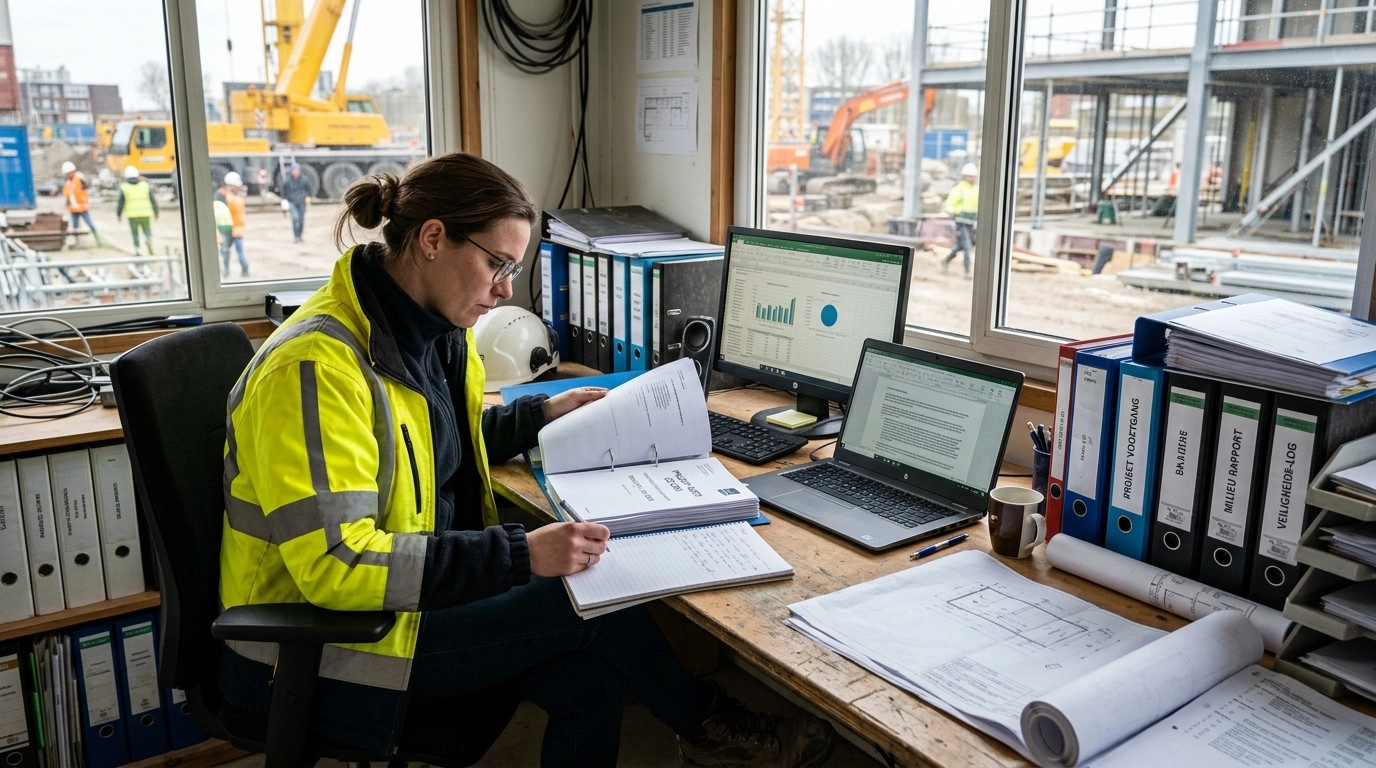
Image for illustration purposes, created with AI.