Practical example Arcadis: drawing up a Climate Transition Plan in 8 steps
Arcadis Netherlands is the first engineering and consultancy firm to be certified at Step 3 of CO₂ Performance Ladder 4.0. Below, Sophie Hanekamp and Benjamin van Olffen explain how, at Arcadis, they drew up a Climate Transition Plan (CTP) in eight steps and share some useful tips along the way.
Step 1: Look at what already exists within your organisation
Often you do not have to start entirely from scratch. From our certification on the previous version of the Ladder, we already had a detailed overview of the footprint of scope 1, 2 and part of scope 3. In addition, we were able to draw on the existing energy policy plans, sustainability strategy, sustainability initiatives and the CSRD Climate Transition Plan of our parent company Arcadis Global as input. We only had to translate these and make them more specific for our Dutch organisation.
Step 2: Carry out an impact and influence analysis
With an impact and influence analysis you determine the boundaries of your organisational activities which emit CO₂ and where you can exert influence. At Arcadis, we divided these activities across three areas: resilience, mobility and places. For each area we mapped the emissions. That formed the basis for the Climate Transition Plan and our objectives.
Step 3: Brainstorm with a wider group
Based on the impact and influence analysis, we started brainstorming with a wide group about our existing strategy, targets and measures for net zero in 2030. The central question was: what does the transition plan need in order to make the move to zero emissions in 2050? From this, concrete targets and measures emerged.
Step 4: Identify bottlenecks
In drawing up our CTP we also came across a number of bottlenecks. One of these was how to deal with zero-emission technologies that do not yet exist or whose potential cannot yet be harnessed. The Other Influenceable Emissions were a challenge too. What exactly are they, and how do we incorporate them into our CTP? For us, as a design and consultancy firm, it is mainly a matter of our clients’ avoided emissions, thanks to our advice and services..
Step 5: Ask key persons for feedback
After we had drawn up the Climate Transition Plan, we gathered feedback internally from key persons. These are mainly sustainability leads and managers who are well informed about sustainability. They are a useful source of information and can review and contribute critical thinking on the CTP.
“Drawing up the CTP for the Ladder was a very pleasant exercise. It made far more tangible what the CSRD transition plan of Arcadis Global means for us in the Netherlands and which steps we need to take to achieve our targets.”
Sophie Hanekamp
Step 6: Enter into a conversation with management
Achieving zero emissions by 2050 is a major challenge. Friction can sometimes arise within the organisation about whether your organisation can really take on that commitment. That makes it all the more important to explain to management, in good time and clearly, why the high ambitions are so important and how your organisation can concretely achieve them. In our case this fortunately succeeded, and our management fully backs our Climate Transition Plan.
Step 7: Make use of an independent expert
One of the requirements for Step 3 is that you enter into a conversation with an approved independent expert. In our case this was an expert in the field of circularity. This expert gave us valuable tips, for example that we should start working with a margin of uncertainty towards the future. In doing so, we take a pessimistic, a realistic and an optimistic scenario into account.
Besides an independent expert, we also call on fellow firms – competitors included. For example, we have engineering firm Witteveen+Bos carry out an internal audit at our organisation, and we in turn do the same for them. Especially with the new handbook, the exchange of knowledge and experience is of great value.
Step 8: Incorporate all feedback into the final CTP
Once we had gathered all the feedback, we could finalise our Climate Transition Plan. In doing so, we also checked whether everything was in line with other documents we had to draw up for version 4.0, such as the value chain analysis. It is important to ensure coherence between all the documents.
Next step: Enter into a conversation with value chain partners
After publishing the CTP, the next step is to enter into a conversation about it with value chain partners. We have already done this with one value chain partner, and some good things came out of it about how we can make further sustainability gains. We have agreed to follow this up in a six-monthly conversation.
Finally: start in good time
Perhaps the most important tip we can give: start in good time. Beforehand we thought we could easily build on everything that was already there from Arcadis Global, such as the CSRD Climate Transition Plan, but in the end everything took much more time. So beware of underestimating it, and start at an early stage with mapping all the information and data that you already have and that is still needed.
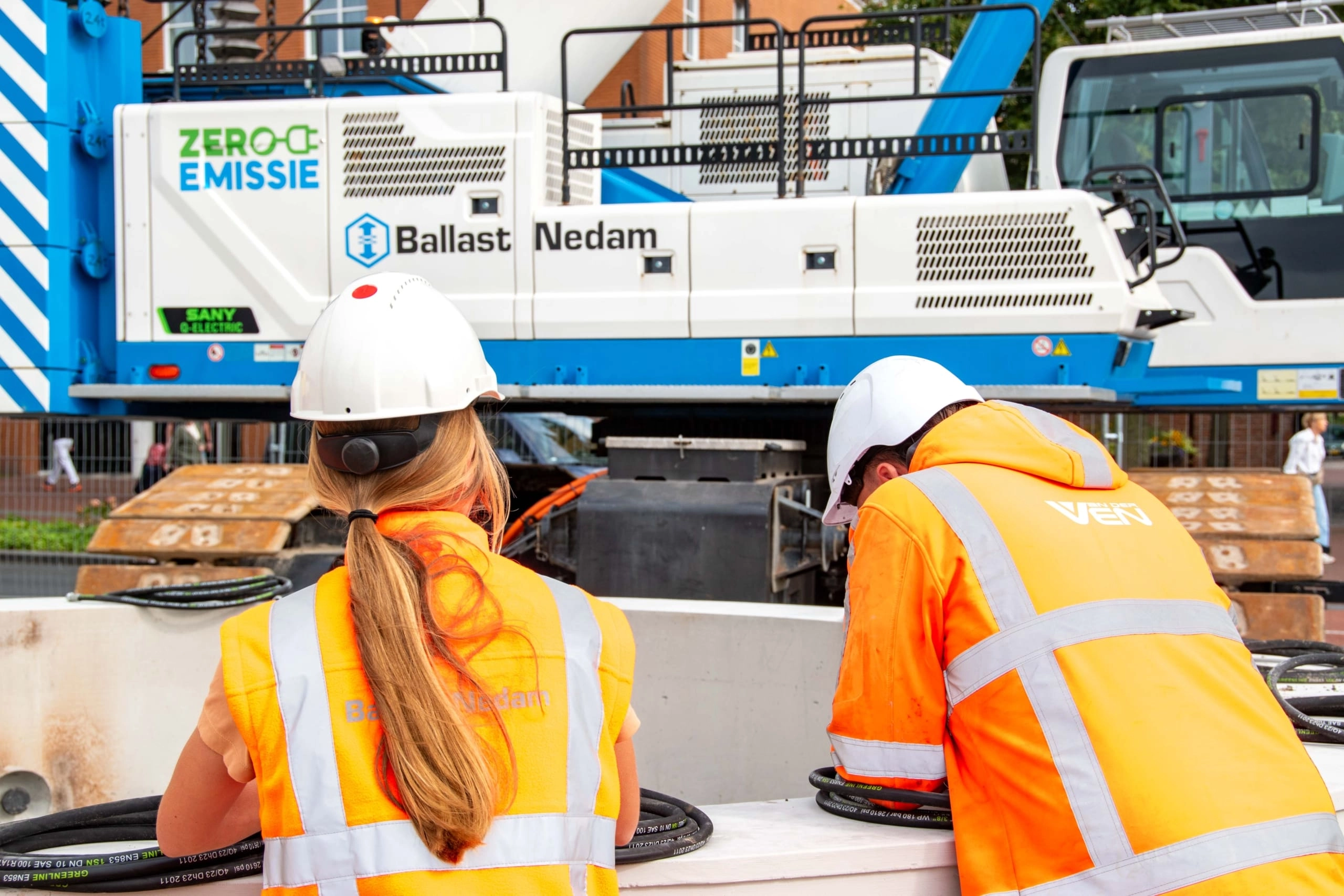
At the end of September, Ballast Nedam received certification for Step 3 of the CO₂ Performance Ladder 4.0. To maximise its impact on projects, the construction company is increasingly seeking collaboration throughout the value chain. Its newly developed BIG 5 programme is intended to provide an additional boost to…
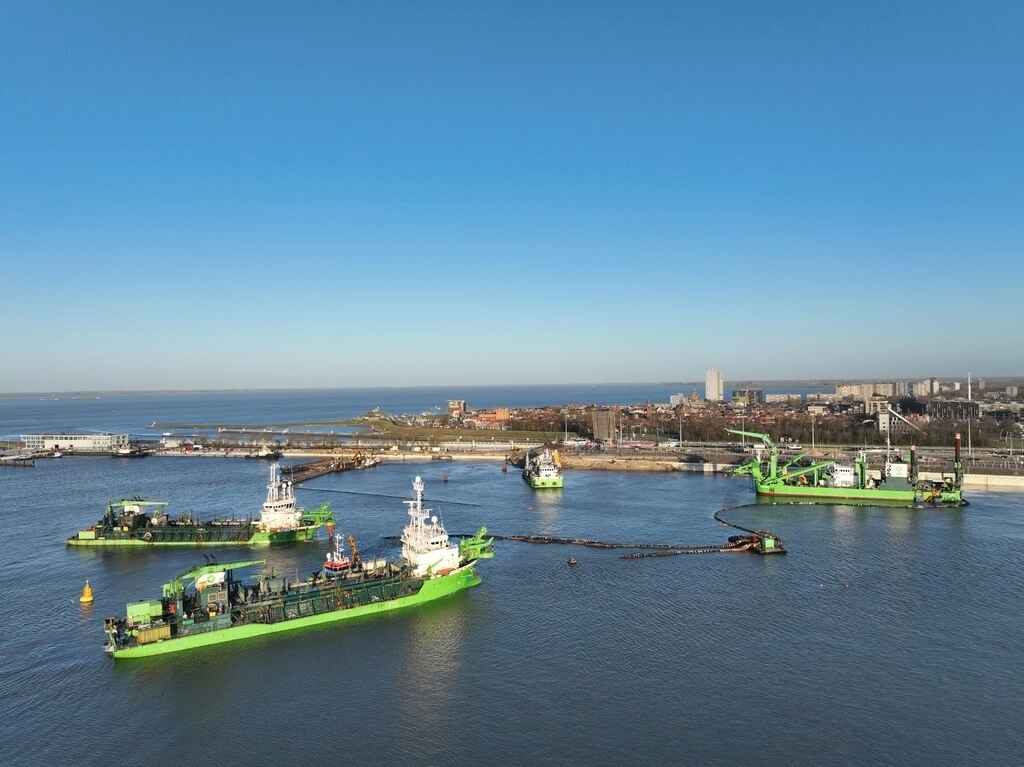
Using tools including the CO₂ Performance Ladder, DEME is working to reduce energy consumption and CO₂ emissions. It has now become the first major marine engineering company to achieve Step 3 certification under CO₂ Performance Ladder 4.0. With cleaner vessels, more efficient operations and greener energy carriers, the…
Receive newsletter?
Would you like to receive updates, project cases and news about the CO2 Performance Ladder every other month? Subscribe to our newsletter!
"*" indicates required fields
Manage Consent
To provide the best experiences, we use technologies like cookies to store and/or access device information. Consenting to these technologies will allow us to process data such as browsing behavior or unique IDs on this site. Not consenting or withdrawing consent, may adversely affect certain features and functions.
Functional
Always active
The technical storage or access is strictly necessary for the legitimate purpose of enabling the use of a specific service explicitly requested by the subscriber or user, or for the sole purpose of carrying out the transmission of a communication over an electronic communications network.
Preferences
The technical storage or access is necessary for the legitimate purpose of storing preferences that are not requested by the subscriber or user.
Statistics
The technical storage or access that is used exclusively for statistical purposes.The technical storage or access that is used exclusively for anonymous statistical purposes. Without a subpoena, voluntary compliance on the part of your Internet Service Provider, or additional records from a third party, information stored or retrieved for this purpose alone cannot usually be used to identify you.
Marketing
The technical storage or access is required to create user profiles to send advertising, or to track the user on a website or across several websites for similar marketing purposes.