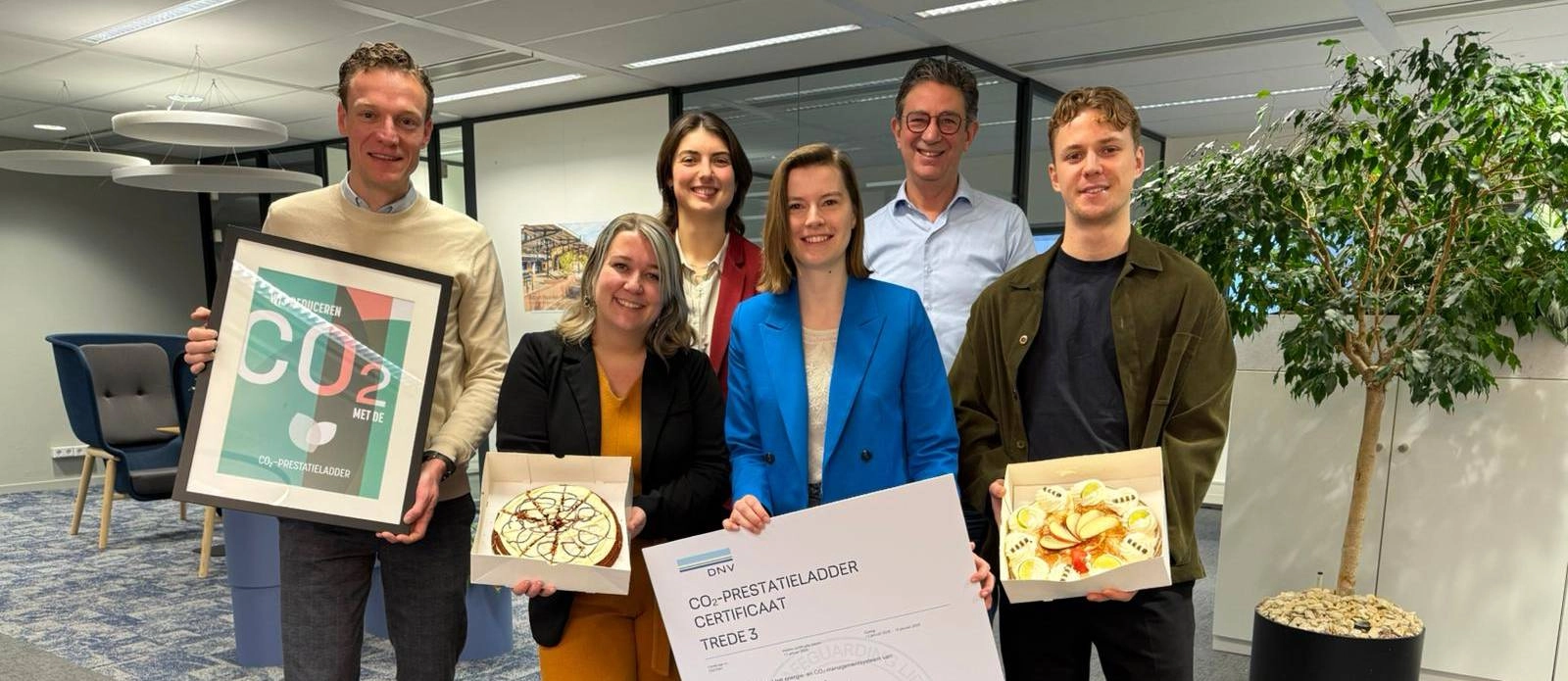
Barneveld has become one of the first municipalities certified at Step 1 of the CO2 Performance Ladder version 4.0. The local authority in Gelderland is strongly committed to reducing and greening its energy consumption, including through the procurement of locally generated energy. By establishing and supporting sustainable energy initiatives, Barneveld aims not only to reduce CO2 emissions, but also to stimulate the local economy and inspire other municipalities. “It is encouraging that the new version of the Ladder places even greater emphasis on energy savings.”
Like all other municipalities in the Netherlands, Barneveld must comply with national climate targets. An organisation that asks residents, businesses and other stakeholders to drastically reduce their CO2 emissions cannot lag behind itself, says Martine Burgstaller, Sustainability Policy Officer at the municipality of Barneveld. “We want to lead by example. That is why we have been certified on the CO2 Performance Ladder since 2018. The Ladder helps us gain structured insight into our energy consumption and to green and reduce that consumption through targeted measures. In addition, the annual audit acts as an important incentive. In the past, I have seen organisations working on CO2 reduction without tools such as the Ladder where sustainability quickly slipped down the agenda when it became inconvenient.”
Procuring locally generated energy
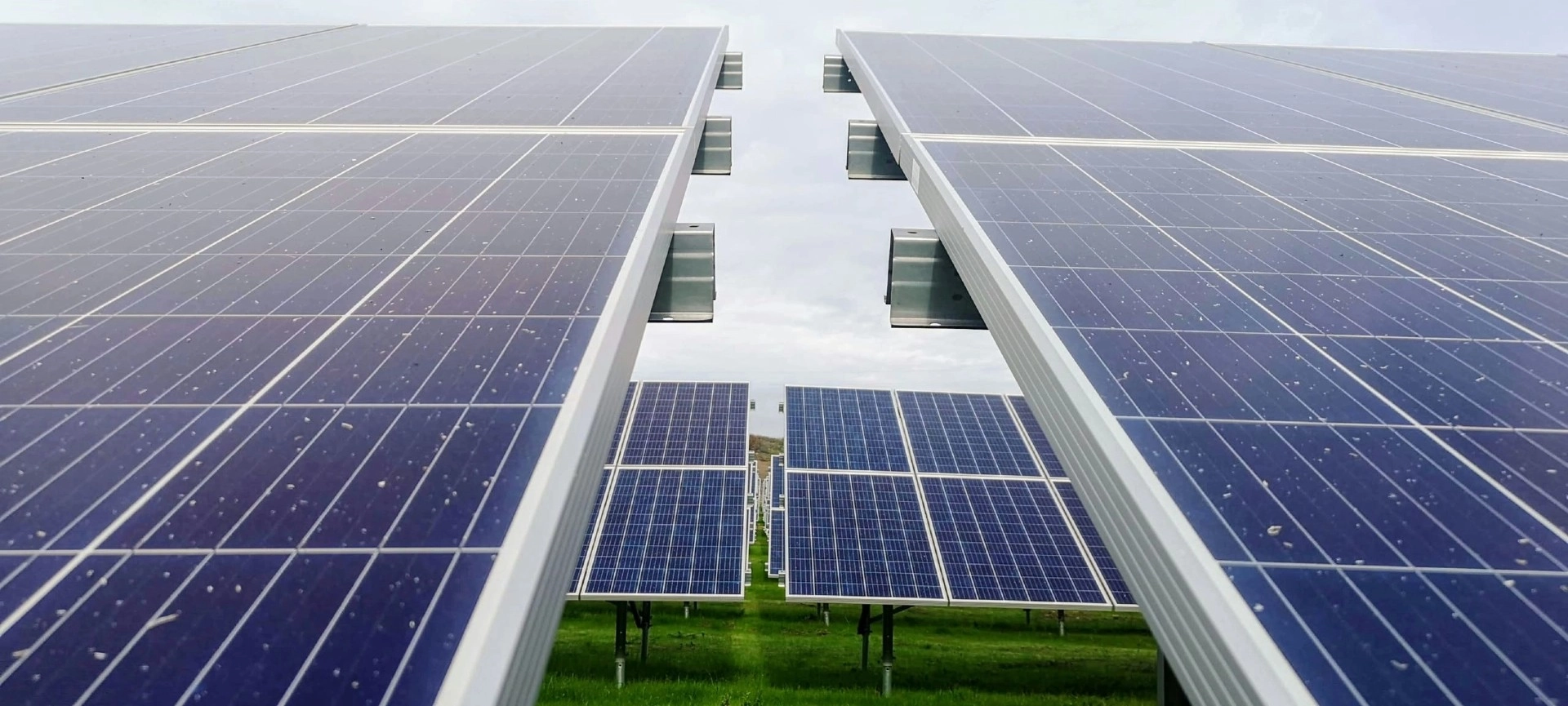
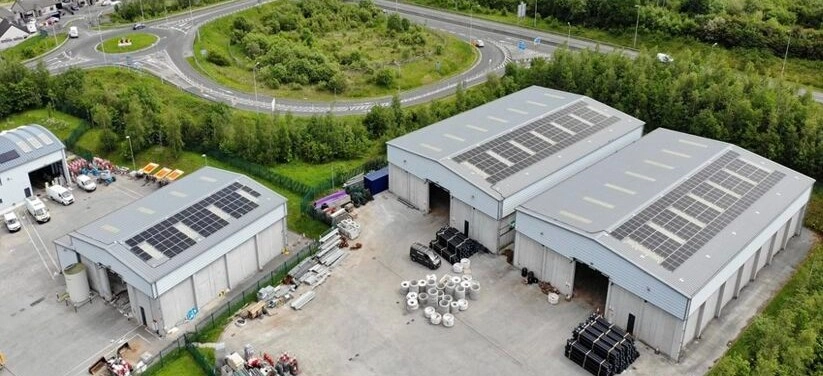
More than half of Barneveld’s emissions stem from electricity consumption, Burgstaller explains. “We own dozens of buildings, such as the town hall, the municipal depot and sports facilities. In addition, there is public lighting, which accounts for almost a third of the municipality’s energy demand. A few years ago, in order to green our electricity use, we decided to establish EnergieWEB together with several neighbouring municipalities, including Wageningen and Ede. Through this initiative, we have been purchasing green electricity from local energy suppliers since early 2024. This includes, for example, solar parks run by energy cooperatives or companies with rooftop solar panels. Increasing numbers of local authorities are now joining. We hope to inspire municipalities in other regions to embrace the procurement of local energy as well.”
Investing in energy storage
Since locally generated energy is not always available, the municipality purchases the remaining electricity on the day-ahead market, Burgstaller continues. “In 2025, we sourced 20 per cent of our green electricity locally; in the coming years we aim to increase that to 30 per cent. Ultimately, the goal is 100 per cent, but that will take time. Due to imbalances between supply and demand, part of the green electricity needs to be stored. We are currently exploring whether we can encourage the deployment of batteries at a solar park within EnergieWEB. If this can be achieved on a larger scale, we could use energy generated during the day in the evening, for example for street lighting. In the coming years, together with suppliers, we hope to create a favourable business case so that they are willing to supply EnergieWEB. In doing so, we will also stimulate the regional economy.”
Making mobility more sustainable
In addition to electricity, gas consumption for heating buildings and mobility also contribute to Barneveld’s CO2 emissions. Burgstaller: “The vast majority of our vehicles, such as refuse collection and cleaning vehicles and those used for grounds maintenance, run on HVO 100, a biofuel. This has significantly reduced our emissions in recent years. Our smaller transport vehicles are almost entirely electric. Electrifying larger vehicles is more challenging due to grid congestion, as we cannot charge them sufficiently. We are, however, closely monitoring developments in hydrogen. Furthermore, we offer an (electric) bicycle scheme for employees. To further explore and seize opportunities to green mobility, we have recently advertised a vacancy for a Sustainable Mobility Officer.”
Transition to Ladder 4.0
Owing to its organisational ambitions and measures, the municipality was certified for a long time at level 3 of CO2 Performance Ladder, version 3.1. After the launch of version 4.0 in early 2025, Barneveld immediately started working with the new handbook, Burgstaller says. “With the launch of EnergieWEB in 2024, we were already in the process of changing our systems for invoicing and energy monitoring. When the new version of the Ladder was released, it seemed logical to incorporate it into that transition. For our draft Energy Policy Programme and Sustainability Programme, we had already formulated targets, which we were able to incorporate into the climate transition plan for the Ladder up to 2030. All in all, the switch from 3.1 to 4.0 was relatively straightforward for us. Especially as we opted for Step 1, which largely corresponds to level 3 of the previous version.”
Appointing key persons
According to Burgstaller, new elements such as appointing key persons did not require extensive additional research. “Within our Sustainability Programme, staff from various departments are already involved in energy and sustainability. In addition, the Property team has its own Energy Coordinator who provides input on energy savings in projects. All these roles have been designated as key employees. The Sustainable Mobility Officer will soon join them. Most of the work involved gathering evidence and properly documenting everything. In particular, the non-CO2 greenhouse gases component required attention. We had to thoroughly determine how to calculate and account for them. We had a constructive discussion about this with our auditor.”
Strong focus on energy savings
One of the positive aspects of the new version of the Ladder, in Burgstaller’s view, is the stronger focus on energy savings. “In our Energy Policy Programme, we focus not only on greening energy but also on using less energy and using it more smartly. These measures align closely with the Ladder’s requirements. For example, we are currently replacing public lighting with energy-efficient LED lighting, have installed an energy-efficient boiler at the swimming pool, and are installing heat pumps and a battery at the municipal depot. This results in substantial energy savings. As we gain greater insight into our energy consumption, we also learn how to use energy in a smarter way, such as by better aligning supply and demand. This is an important part of our structural approach.”
Greater freedom in communication
Burgstaller is also very positive about the revised communication requirements. “Under the previous version of the Ladder, we encountered several issues. One of the mandatory elements was the publication of PDFs related to the certification. However, our municipality has a policy of not publishing PDFs in order to keep the website accessible. In version 4.0, communication requirements are more flexible. In addition, version 3.1 included several mandatory communication moments about the Ladder, whereas as a municipality we only wish to communicate when there is news value. The new handbook is far more flexible in terms of communication, which is very welcome. It enables us to align everything more closely with how we communicate about sustainability externally.”
No external consultant
According to Burgstaller, the municipality deliberately chose to make the transition to the new version of the CO2 Performance Ladder without an external consultant. “As I worked with the Ladder in my previous role, I have considerable knowledge and experience. That is certainly an advantage. I always prefer for us as a municipality to collect and analyse all the data ourselves. If you outsource this to an external party, you have less control. You may receive a clear overview of your energy consumption and related emissions, but you still have to delve into the details yourself. When you handle it in-house, you immediately see where deviations occur and what causes them. For example, we were able to identify that significant savings were attributable to installing more efficient boilers at the swimming pool. You are directly engaged with the substance. I carried out the data analysis together with the Energy Coordinator, who knows exactly which projects are under way, when maintenance has been carried out and which measures have been implemented.”
Impact beyond the organisation
Although, for step 1, Barneveld focuses primarily on emissions in scope 1 and 2, the municipality also considers reductions beyond its own organisation. For example, it was one of the initiators of the Smart Energy Hub, a decentralised energy system in which sustainably generated energy will be produced, stored and distributed. In addition, the municipality strongly prioritises sustainable solutions in its projects. Burgstaller: “Since this year, additional budget has been made available for sustainability in road maintenance projects. This means that the municipal project manager and the contractor can jointly explore, for example, more sustainable material choices or other saving options in order to keep emissions as low as possible. Sometimes we specify solutions in the contract documents; at other times we give contractors greater freedom to propose ideas. We aim to engage in dialogue as much as possible.”
No immediate ambition for a higher level
By seeking to make an impact within the value chain, the municipality is already addressing several requirements for steps 2 and 3 of Ladder 4.0. Nevertheless, Barneveld does not currently have the ambition to seek certification at a higher level, Burgstaller explains. “Collecting all the data and meeting the requirements for steps 2 or 3 entails a considerably greater administrative burden. With our current capacity, we do not have the room for that. For the time being, we will therefore remain certified at step 1, which we are very proud of. At the same time, wherever possible, we will continue to pursue reductions beyond our direct organisation – but primarily from our intrinsic motivation to become more sustainable, not in order to move up a level on the Ladder. Who knows, perhaps we will revisit that in the future.”
Read more:
All about Step 1 of CO₂ Performance Ladder 4.0: reducing CO₂ within your organisation
How to appoint key employees within your organisation