The European Commission has proposed a new Public Procurement Act. The proposal aims to make public procurement more strategic, with greater emphasis on quality, sustainability, social considerations, innovation and security rather than price alone. Not only price, but also quality, including sustainability, social criteria, innovation and safety, should play a greater role in the assessment of tenders.
The scale of public procurement makes the proposal particularly significant. European governments spend approximately €2.5 trillion annually on goods, services and works. This is equivalent to around 15 per cent of the European Union’s gross domestic product.
The current three European public procurement directives will be replaced by a single directly applicable regulation. This means that it will apply directly in all Member States. The aim is to make the rules more consistent across Europe and reduce administrative burdens.
Best price-quality ratio becomes the guiding principle
An important change in the proposed European public procurement framework is that the most economically advantageous tender (MEAT) will become the guiding principle when awarding public contracts. With this, the European Commission aims to prevent public procurement from being driven too heavily by the lowest price alone. Quality should become the standard when awarding public contracts.
Under the proposal, quality criteria should in principle account for at least 30 per cent of the assessment. For labour-intensive contracts, a minimum of 50 per cent is proposed. Contracting authorities may deviate from this if they adequately safeguard the quality of the contract in another way, for example through requirements in the tender or conditions for contract performance.
Quality can be interpreted broadly. For example, environmental and climate performance can form part of the quality assessment. The Commission refers, among other things, to reducing environmental and climate impacts throughout the life cycle, decarbonisation, circularity and the efficient use of resources. Social aspects, innovation, safety and the resilience of supply chains may also be taken into account.
Importantly, the 30 per cent does not apply specifically to sustainability. It concerns quality as a whole. The proposal therefore gives contracting authorities more scope to incorporate different quality aspects, including sustainability and climate, into the assessment.
Greater focus on demonstrable climate performance
For organisations participating in public tenders, this means that demonstrating sustainability and climate performance will become increasingly important.
This is in line with a development that has been visible in sustainable procurement for some time. Governments and other contracting authorities are increasingly looking for ways to translate climate objectives into concrete requirements and award criteria. Reliable and verifiable information on the CO₂ emissions of organisations and projects plays an important role in this.
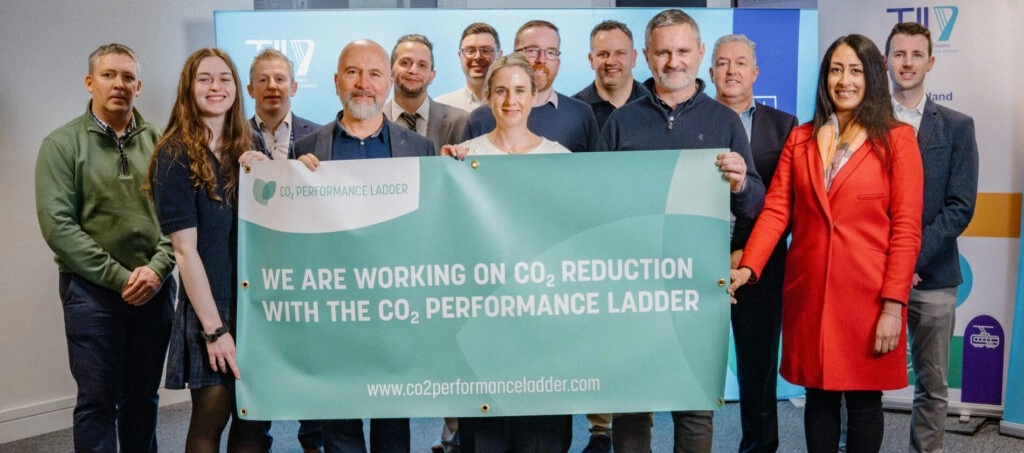
Tools such as the CO₂ Performance Ladder can help organisations make their climate performance reliable, verifiable and transparent, while working systematically towards CO₂ reduction. The proposed Public Procurement Act does not prescribe the use of sustainability instruments. However, the move towards more quality-driven and sustainability-focused procurement could increase the importance of demonstrable climate performance.
What does this mean for contracting authorities?
For contracting authorities, the proposal means that it will become increasingly important to determine in advance which quality aspects are relevant to a procurement process and how these can be assessed objectively and verifiably. Sustainability and climate performance will play a more prominent role. This is an additional good reason to use the CO₂ Performance Ladder as an externally verified sustainable procurement instrument. This requires clear requirements and award criteria, as well as a rationale that is transparent and can be properly assessed.
The Public Procurement Act is currently still a proposal. The European Commission has submitted the proposal to the European Parliament and the Council of the European Union. Its final content may still change during the legislative process.