Ballast Nedam builds towards an emissions-free future with Ladder 4.0
At the end of September, Ballast Nedam received certification for Level 3 of the CO₂ Performance Ladder 4.0. To maximise its impact on projects, the construction company is increasingly seeking collaboration throughout the value chain. Its newly developed BIG 5 programme is intended to provide an additional boost to emissions reduction in scope 3, including through the use of bio-based materials, sustainable concrete and circular materials. The fact that Ballast Nedam is increasingly carrying out projects abroad does present challenges when it comes to working sustainably. At the same time, it offers valuable opportunities to promote clean and emissions-free construction across borders.
The Afsluitdijk, the Vredespaleis in The Hague and the Oosterschelde storm surge barrier. These are just a few of the iconic structures built by Ballast Nedam. The Dutch company has both a construction and an infrastructure division, explains CSR Director Bramske van Beijma. “For example, we are involved in the renovation of roads and bridges, such as the Merwede Bridge on the A27. We carry out large-scale as well as regional projects, such as resurfacing provincial roads, constructing roundabouts and building homes. Although most of our projects take place in the Netherlands, we are also active internationally, particularly in the Caribbean, Africa and Central Asia. There, we are involved in projects including the construction of airports, roads, bridges, schools and hospitals.”
Bramske van Beijma
Ballast Nedam and the CO₂ Performance Ladder
Ballast Nedam has been certified under the CO₂ Performance Ladder since 2012. According to Van Beijma, the Ladder provided guidance at a time when corporate social responsibility was beginning to emerge. “At the time, preparing your company for the future within the construction and infrastructure sectors was still relatively new. Many companies were looking for ways to make it part of their operations. The CO₂ Performance Ladder was one of the first tools to provide guidance in this area. It gives you structured insight into your CO₂ footprint, shows you which levers you can pull to reduce emissions and provides opportunities to set targets. This has helped Ballast Nedam, as well as other construction and infrastructure companies, enormously in taking active and structural steps towards CO₂ reduction.”
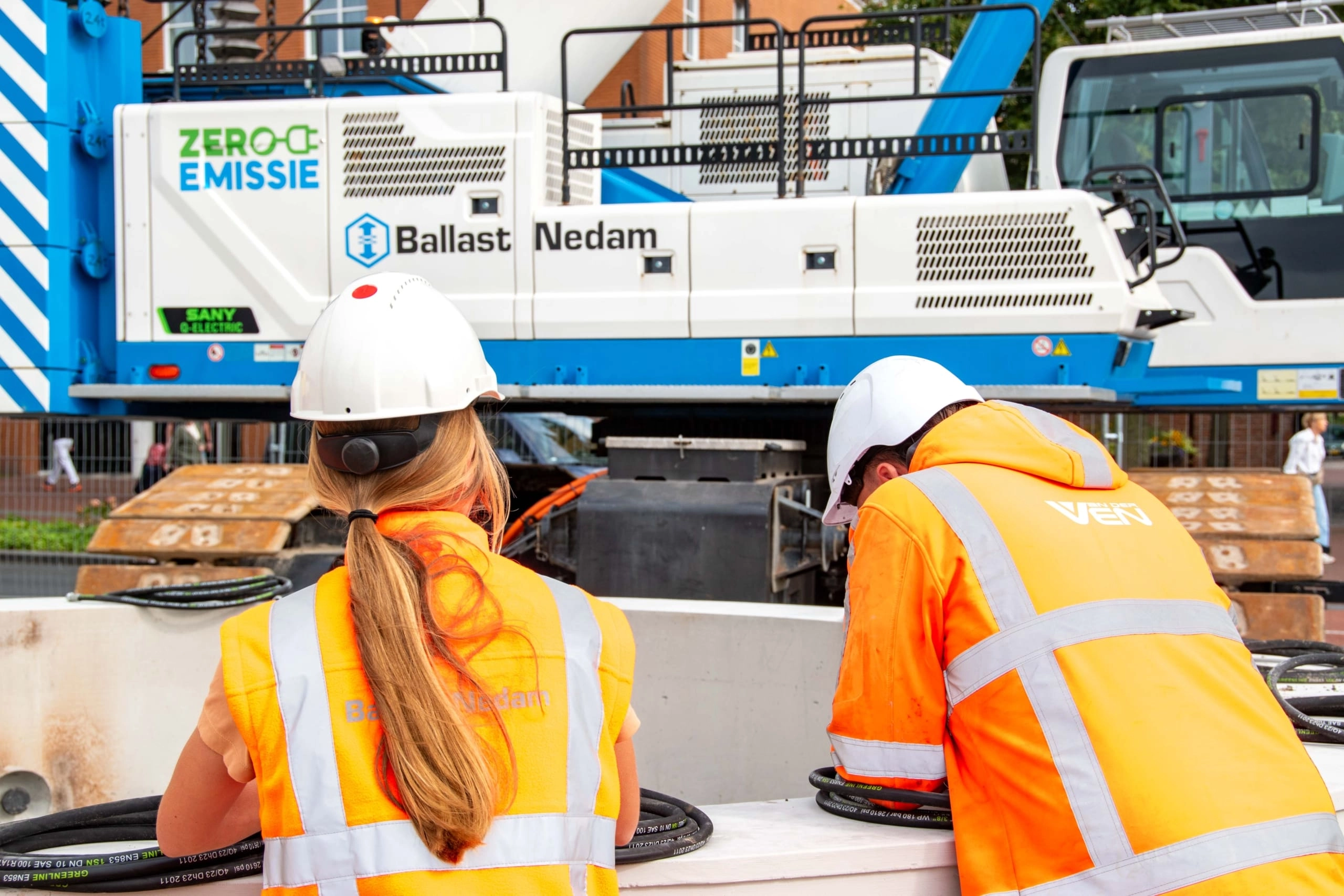
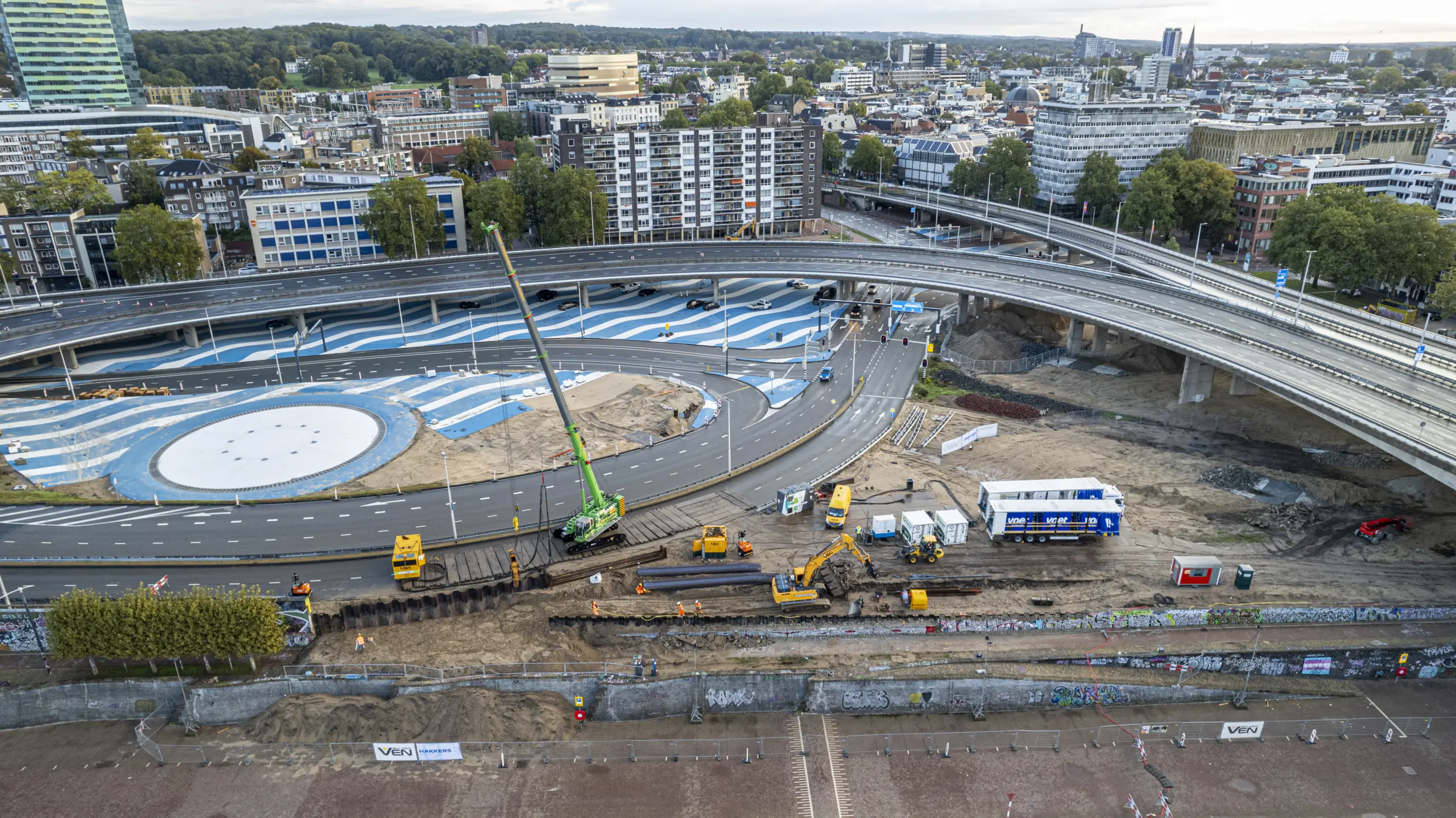
Without the Ladder, Ballast Nedam would not have developed as far as it has in terms of emissions-free working, says Van Beijma. As an example, she cites the renovation of the Rijnkade in Arnhem, a project completed in 2025. “We carried out this project almost entirely emissions-free. Because we did not have all the machinery and equipment in-house, we worked with Hakkers and Van der Ven on this project. What helped enormously during the execution was that the municipality had already installed shore power along the quay. This meant we had no shortage of green electricity and did not have to rely solely on batteries; we could also plug our equipment directly into the power supply. If you really want to work cleanly, it is important to have clients who are willing to think ahead.”
Project Rijnskade Arnhem
The materials were also carefully considered from a sustainability perspective, Van Beijma continues. “We reused 5,500 cubic metres of sand and a large proportion of the black stones from the quay wall. In addition, the concrete wall sections were prefabricated, which meant that much less work had to be carried out on site. This also significantly reduced disruption to the surrounding area. The disruption was already very limited because electric construction machinery is considerably quieter and we had a large proportion of the materials delivered by ship. We also pressed the sheet piles rather than driving them in. Because many aspects were new, it was quite exciting. That is why I am particularly proud that everything worked out. This project is now being used as an example in the Clean and Emissions-Free Construction Covenant (SEB).”
Looking further ahead and working with the value chain
After the launch of CO₂ Performance Ladder 4.0, Ballast Nedam immediately started working with the new version. Van Beijma: “Because we were already preparing as a company for the European Corporate Sustainability Reporting Directive (CSRD), we already had the framework. Ladder 4.0 was developed in line with the CSRD. We did, however, need to spend some time working out exactly what all the new elements and requirements entailed. One of these is the Climate Transition Plan, with targets for 2030 and 2050 and all the steps needed to achieve them. We already had a reasonably clear picture for 2030, but much less so for the period beyond that. One of the valuable aspects of Ladder 4.0 is that it forces you to think carefully about the longer term as well, particularly for Level 3. As a construction company, we do not normally look that far ahead; we are mainly focused on the coming years.”
Another added benefit of the new version, according to Van Beijma, is its focus on emissions throughout the value chain and beyond, namely scope 3 and Other Influenceable Emissions (OIEs). “If you look at scopes 1 and 2, we are already well on our way towards net zero by 2030 for our activities in the Netherlands. We are focusing on four main areas: mobility, construction sites, production facilities and office locations. By, among other things, purchasing and generating our own green electricity, electrifying our vehicle fleet and purchasing electric construction equipment, we have significantly reduced our emissions within the first two scopes, particularly over the past five years. We now also need to look much more closely at our impact beyond scopes 1 and 2. We were already doing this to some extent, but what is new is that the Ladder now also requires us to report on it. This encourages us to work even more closely with value-chain partners and to take a more critical look at design and procurement.”
BIG 5: 25 per cent lower emissions by 2030
Almost 95 per cent of Ballast Nedam’s emissions fall within scope 3. The procurement of materials accounts for the vast majority of these emissions. Through the BIG 5 programme, the company aims to reduce emissions by 25 per cent by 2030 compared with 2025. The focus is on timber construction, sustainable concrete, circular materials, zero-emission construction sites and energy-efficient installations. Van Beijma: “Each business unit must indicate in its business plans which of the five themes it will focus on in the coming years in order to achieve the greatest possible impact. Because we monitor everything very closely, each unit knows exactly where the emissions are coming from and therefore where it needs to focus its efforts. For property development, for example, timber construction is relevant, while our concrete plant will focus primarily on sustainable concrete.”
According to Van Beijma, the programme operates as much as possible from the bottom up. “We first visited all the business units and asked which levers we could pull, what ideas they had and where the obstacles were. What can be done in construction, for example, but is more difficult in infrastructure? How can we influence procurement officers and design managers? And how do we engage in dialogue with our clients and suppliers? This can be done, among other things, by organising meetings. We incorporated all this input into an approach for how we will work together with the value chain. Our Executive Board was very enthusiastic about this, which is why the BIG 5 programme is now embedded in our strategy.”
The BIG 5 programme also places considerable emphasis on internal knowledge sharing, says Van Beijma. “We have set up an intranet site containing, among other things, example projects, fact sheets and contact details. If someone from one of the business units wants to participate in a tender, it is useful for them to know who to contact for specific expertise. For example, when it comes to building with bio-based materials such as timber. What are the implications for maintenance, fire resistance and insurance? We strongly encourage people within Ballast Nedam to connect with each other and share knowledge on these topics.”
Working with value-chain partners
Taking a broader view of the value chain also requires greater collaboration with value-chain partners. Van Beijma: “We have been talking to our suppliers about sustainability for years. We are often on the same page, but electrification, for example, is not always easy. There can also be financial risks involved, as a supplier wants as much certainty as possible about demand. By engaging in dialogue about this, you can often make progress. For example, our Ballast Nedam Infra Regionaal business unit has started working with De Bruyn Transport. Together, we agreed that De Bruyn would purchase a number of electric lorries, which we would then commit to using for a certain number of years. This has since been so successful that De Bruyn is expanding its fleet further.”
Other obstacles can also make it difficult to achieve maximum emissions reductions, Van Beijma continues. “We are sometimes dependent on the available infrastructure, such as charging points. This is particularly important to consider carefully in advance for larger projects. Good preparation and planning are crucial. At the Merwede Bridge, for example, we are installing an electric charging hub ourselves. This raises all sorts of questions: how many charging points are needed, which vehicles need to charge, when will those vehicles arrive, and who should be given access? It requires a different kind of preparation from what we have been used to so far.”
Increasing number of projects abroad
Another challenge is the fact that Ballast Nedam is increasingly carrying out projects abroad. Van Beijma: “Last year, the ratio was approximately 75-25, but it is now moving towards 50-50. Because the Ladder is often not required in tenders abroad, we do not have to meet the Ladder requirements at project level. However, because of our organisation-level certification, we do look at how we can achieve the greatest possible impact. That is not always easy, for example because green electricity infrastructure or proper waste processing facilities may be lacking. We then have to make arrangements on a project-by-project and region-by-region basis. Sometimes, for example, we choose to transport the waste ourselves to a location where it can be processed sustainably.”
The different standards also make working on CO₂ reduction more difficult. Van Beijma gives the emission factors for air travel as an example. “According to the UK Department for Environment, Food and Rural Affairs (DEFRA), long-haul flights result in relatively higher emissions because those aircraft are more heavily loaded. According to the Dutch factor, however, short-haul flights have a greater impact because the main emissions – during take-off and landing – have to be spread over fewer kilometres. For international projects, we therefore need to think carefully about which factor we use and how we harmonise everything. In addition to emission factors for air travel, product-specific data can also vary significantly from country to country. Sometimes the data are not available at all.”
At the same time, Van Beijma sees the growing number of projects abroad as an excellent opportunity for Ballast Nedam to make an impact across borders. Van Beijma also plays a role in this within Rönesans Holding, the Turkish parent company of Ballast Nedam. “A few years ago, I was asked to join the board of Rönesans as CSR Director, in order to share Ballast Nedam’s expertise and experience in sustainability. Since then, Rönesans has made enormous progress by focusing on CO₂ reduction measures and actively discussing and monitoring them. For example, by building its own wind farms and connecting the green electricity to its own assets. The ambition is to develop a renewable energy portfolio of 2 gigawatts within five years and thereby actively contribute to the energy transition. The things we do on a small scale in the Netherlands can be implemented on a much larger scale by them. And that is certainly not a given, as sustainability is often not part of tender requirements in international markets. It therefore genuinely comes from intrinsic motivation.”
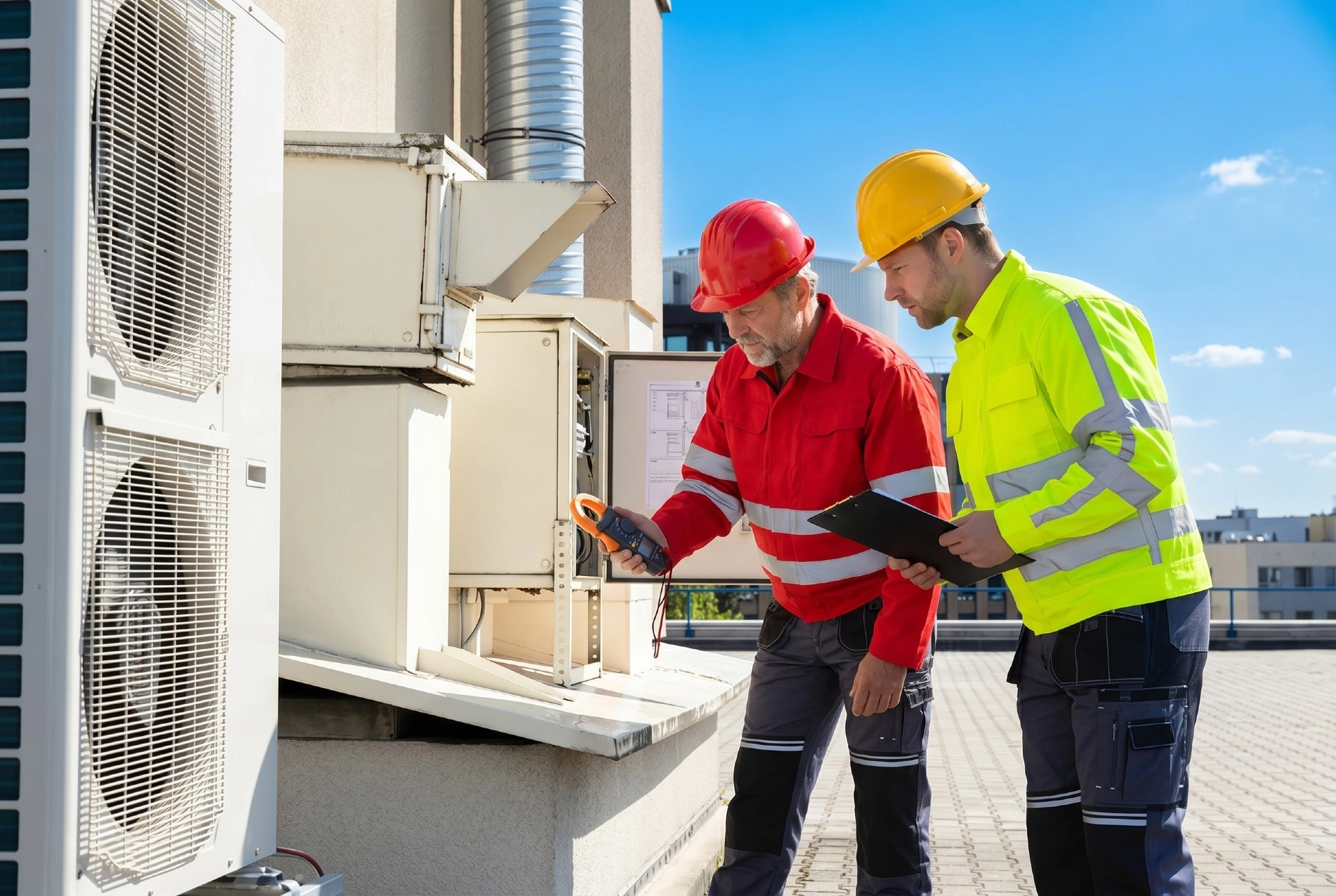
This article focuses on the Dutch implementation of the revised Energy Efficiency Directive (EED). The EED is a European directive that each EU Member State translates into national legislation and regulations. As a result, obligations, thresholds, and enforcement may differ from one country to another. In the Netherlands,…
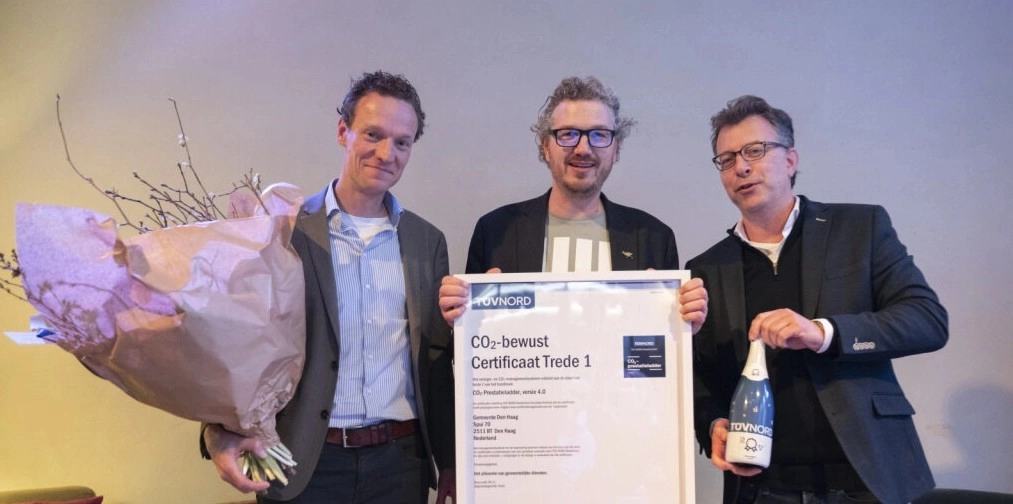
As the first of the major Dutch municipalities, The Hague has been certified on version 4.0 of the CO₂ Performance Ladder, at Step 1. Achieving the certificate was no straightforward task. There were questions about whether the CO₂ footprint was correct, and identifying key persons also proved quite an…
Receive newsletter?
Would you like to receive updates, project cases and news about the CO2 Performance Ladder every other month? Subscribe to our newsletter!
"*" indicates required fields
Manage Consent
To provide the best experiences, we use technologies like cookies to store and/or access device information. Consenting to these technologies will allow us to process data such as browsing behavior or unique IDs on this site. Not consenting or withdrawing consent, may adversely affect certain features and functions.
Functional
Always active
The technical storage or access is strictly necessary for the legitimate purpose of enabling the use of a specific service explicitly requested by the subscriber or user, or for the sole purpose of carrying out the transmission of a communication over an electronic communications network.
Preferences
The technical storage or access is necessary for the legitimate purpose of storing preferences that are not requested by the subscriber or user.
Statistics
The technical storage or access that is used exclusively for statistical purposes.The technical storage or access that is used exclusively for anonymous statistical purposes. Without a subpoena, voluntary compliance on the part of your Internet Service Provider, or additional records from a third party, information stored or retrieved for this purpose alone cannot usually be used to identify you.
Marketing
The technical storage or access is required to create user profiles to send advertising, or to track the user on a website or across several websites for similar marketing purposes.